
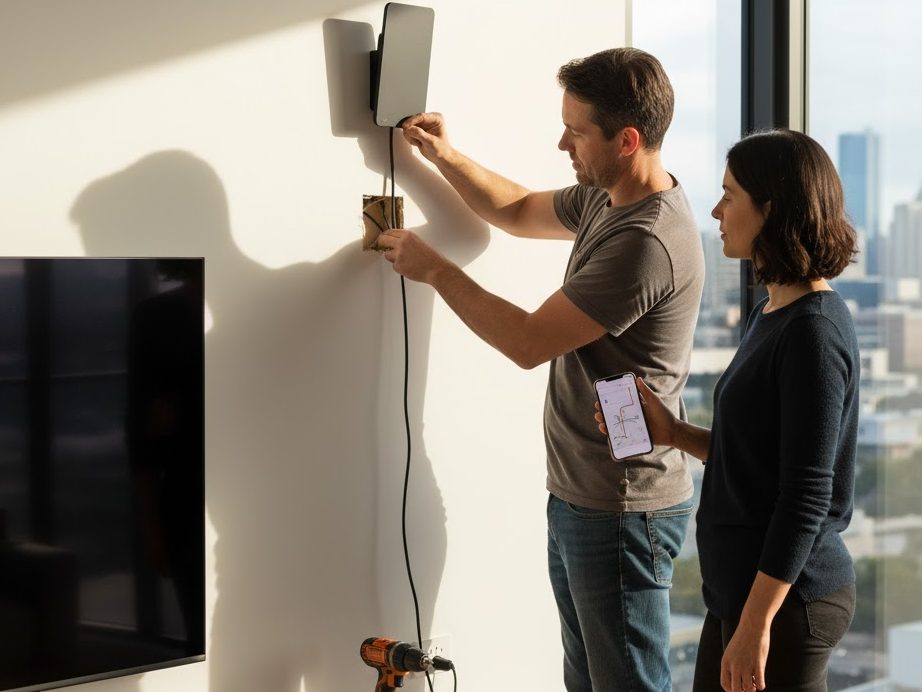
Installing a TV antenna cable in your wall can feel complicated, especially if you’re trying to avoid creating unnecInstalling a TV antenna cable in your wall may seem straightforward at first, but it quickly becomes more complex than most Adelaide homeowners expect. First, walls contain hidden elements like studs, electrical wiring, and insulation that require careful planning. Next, understanding the best cable type and routing strategy ensures you achieve clear reception without damaging your home.
Many DIY attempts fail because homeowners overlook these details, leading to weak signals or costly repairs. Fortunately, with the right approach, the process can be smooth and reliable. This guide walks you step by step through the essentials, explaining what tools and techniques matter most. Ultimately, following these instructions or seeking professional help ensures your home’s entertainment setup looks sleek and delivers consistent, high-quality picture and sound. Golden Antenna’s mission is to make this process stress-free, safe, and effective for every homeowner.
Key Takeaways
- A proper plan is essential when learning how to install a TV antenna cable in wall in Adelaide because wall materials, internal wiring, and cavity space affect signal quality.
- Using high-quality coaxial cable and connectors prevents interference, pixelation, and long-term reception issues.
- Adelaide homes vary in structure, so identifying safe routing paths helps avoid hitting electrical lines, water pipes, or timber framing.
- Precise routing, gentle handling, and correct wall plate installation all contribute to stronger, more reliable TV reception.
- Professional help saves time and stress, ensuring a smooth installation and long-lasting performance.
Overview
Understanding how to install TV antenna cable in wall in Adelaide involves more than simply drilling holes. Firstly, walls may contain insulation, electrical wires, or timber studs that can obstruct your path. Secondly, choosing the right coaxial cable and connectors directly affects signal quality and long-term reliability. Additionally, entry and exit points must be carefully planned to maintain a clean, professional appearance.
Many DIY installations fail because homeowners underestimate these challenges or skip proper measurement steps. By contrast, following a systematic approach ensures smooth routing, minimal wall damage, and consistent reception throughout your home. Ultimately, this guide highlights key steps, safety measures, and professional strategies to help you enjoy clear and reliable TV signals in every room.
Installing a TV Antenna Cable in Your Wall? Adelaide Homeowner’s Guide
Complete guide to proper in-wall antenna cable installation
| Installation Step | Key Considerations | Professional Approach |
|---|---|---|
| Understanding Wall Material Impact on Signal | ||
| Wall material types | Plasterboard, brick, double-brick affect routing and performance | Density influences cable protection from bends and interference |
| Plasterboard walls | Make installation easier with minimal resistance | Routing can be done efficiently with proper tools |
| Brick or double-brick homes | Require drilling equipment or alternate entry points | Professional equipment necessary for proper penetration |
| Older home concerns | May hide electrical cables close to surface level | Extra caution required to avoid hidden wiring hazards |
| Signal clarity factors | Cable passing near metal studs, power lines, or insulation | Understanding wall composition provides major installation advantage |
| Cable Choice Impact on Signal Strength | ||
| RG6 quad-shield cable | Widely recommended for Adelaide households | Resists interference and preserves signal over longer distances |
| Cheaper cable problems | May work initially but degrade faster causing pixelation | Leads to total signal loss requiring future rewiring |
| Connector quality | Low-quality or mismatched fittings introduce system noise | Even good cable performs poorly with inferior connectors |
| Cable run length | Excessive distance without proper shielding weakens reception | Right choice at start saves frustration of future troubleshooting |
| Common Homeowner Mistakes to Avoid | ||
| Electrical wiring proximity | Running antenna cable too close to electrical wiring | Electrical interference weakens signal causing channel dropouts |
| Reused connectors | Using old or reused connectors leads to loose fittings | Eventually fail requiring reinstallation or troubleshooting |
| Wrong tools damage | Results in damaged wall cavities or cracked plaster | Proper tools prevent structural damage and cosmetic issues |
| Insulation compression | Routing through insulation that compresses or bends cable sharply | Degrades signal performance and damages cable internally |
| Error prevention | Easily avoided with careful planning or professional help | Trained technicians handle these complexities daily |
| Identifying Safe Entry and Exit Points | ||
| Pre-installation detection | Use stud finder to detect timber framing, wires, or pipes | Never assume cavity is empty before cutting or drilling |
| Adelaide home variations | Homes vary widely requiring individual assessment | Professional evaluation identifies safe drilling locations |
| Wall plate positioning | Should be easy to reach and not hidden behind furniture | Reduces strain on cable and improves accessibility |
| Marking points | Helps visualize how cable travels inside wall cavity | Prevents costly mistakes and accidental structural damage |
| Essential Tools for Proper Installation | ||
| Drill and spade bit | Long spade bit reaches deep into cavity without forcing cable | Proper depth prevents damage and allows smooth routing |
| Fish tape or glow rod | Guides cable through tight spaces in wall cavities | Essential for navigating complex internal structures |
| Connection tools | Quality connectors, cable stripper, and compression tool | Produces secure connections preventing future signal issues |
| Alignment tools | Stud finders, level tools, and painter’s tape | Make installation cleaner and more accurate overall |
| Tool investment value | Proper equipment increases success chances dramatically | Without these, homeowners struggle with poor results |
| Handling Wall Cavities Correctly | ||
| Gentle cable handling | Avoid pulling aggressively—strips internal shielding or weakens core | Patience and technique prevent long-term cable damage |
| Sharp bend avoidance | Sharp bends degrade signal flow significantly | Locate ideal pathway reducing stress and protecting cable |
| Common DIY problems | Fishing blindly, punching extra holes, trapping cable behind studs | Measured plan makes installation smoother, safer, more efficient |
| System integrity protection | Proper cavity handling protects TV reception system long-term | Careful approach ensures years of reliable performance |
| Pulling Cable Through Wall Safely | ||
| Gentle guidance required | Guide carefully to prevent snags, tightening, or scraping | Adelaide homes may have nails, framing, or insulation obstructing path |
| Slow steady movement | Prevents damage while keeping enough slack for wall plate | Excessive force risks tearing shielding causing reception problems |
| Professional technique | Smooth pull is key to professional-level installation | Experience prevents common DIY pulling mistakes |
| Securing Cable for Long-Term Stability | ||
| Securing importance | Maintains cable lifespan and performance over years | Loose cables shift from vibration or nearby pipe movement |
| Signal disruption prevention | Proper securing keeps cable at safe distance from electrical wiring | Prevents electromagnetic interference affecting reception |
| Quality supports | Cable clips or cavity-rated supports ensure cable stays in place | Stable pathway keeps TV signal strong and reliable long-term |
| Installing Wall Plate and Final Connections | ||
| Professional finish | Clean, well-positioned wall plate makes installation look professional | Level plate improves accessibility and reduces cable strain |
| Connector tightness | Tight secure connectors prevent signal loss and protect from movement | Avoid over-tightening which damages copper core inside cable |
| Connection verification | Double-check each connection avoiding loose fittings | Prevents weak reception and ensures strong signal performance |
| Testing final step | Test TV channels confirming strong signal performance | Ensures installation supports crisp, clear picture from start |
| Professional Installation Timeline | ||
| Standard installation time | 1-3 hours depending on wall type and cable path | Accessibility and wall complexity affect total time required |
| Brick wall considerations | Requires specialized drills and routing techniques | Professional equipment prevents damage maintaining signal quality |
Understanding How Wall Installations Affect Signal Quality
Why Wall Materials Matter
Different wall materials found in Adelaide homes significantly influence the antenna cable installation process. For example, plasterboard walls are easier to work with, allowing cables to be routed with minimal resistance. However, brick or double-brick walls require specialized drilling equipment and careful planning.
Moreover, wall density affects how well the cable is protected and how signal interference occurs. Older homes, in particular, may hide electrical cables near the surface, which requires extra caution. By understanding your wall type, you can prevent mistakes, reduce risk, and maintain signal quality.
How Cable Choice Impacts Signal Strength
The type of coaxial cable you use determines the quality of your TV reception. Specifically, RG6 quad-shield cable is recommended for Adelaide homes because it resists interference and supports digital signals over long distances. In contrast, cheaper cables may initially work but degrade faster, leading to pixelation or complete signal loss.
Additionally, using poor connectors can create weak points along the line, reducing performance. Careful selection at the outset saves time and prevents costly rewiring in the future. Ultimately, investing in high-quality materials ensures strong, reliable reception for years to come.
Common Mistakes Homeowners Must Avoid
Many homeowners unknowingly create problems during DIY wall installations. Firstly, running the cable too close to electrical wiring can weaken the signal or create safety hazards. Secondly, using old or reused connectors often leads to loose connections that degrade performance.
Thirdly, improper drilling can damage plaster or wall studs. Finally, sharp cable bends inside the cavity can break the internal conductor, reducing reception quality. By avoiding these mistakes, you save time, prevent repairs, and ensure a professional-quality TV signal throughout your home.
Preparing Your Wall for Cable Installation
Identifying Safe Entry and Exit Points
Choosing the correct entry and exit points is critical for a neat and safe installation. First, use a stud finder to locate timber, wires, and pipes before drilling. Next, plan the cable path so that it is short, unobstructed, and aligned with your TV placement. Additionally, consider accessibility for wall plates and future maintenance.
Furthermore, marking your entry and exit points reduces mistakes and prevents accidental damage. Ultimately, careful preparation ensures a smooth installation and reduces the risk of costly errors.
Tools You’ll Need for Proper Installation
Even small projects require proper tools for safe and effective results. For example, a drill with a long spade bit helps reach deep cavities, while a fish tape guides the cable through tight spaces.
Also, cable strippers and compression tools help create secure connections. Moreover, stud finders, levels, and painter’s tape ensure accurate alignment. Finally, quality connectors and wall plates protect your installation and improve signal reliability. By gathering the right tools beforehand, you increase the chances of a clean and efficient installation.
How to Handle Wall Cavities Correctly
Managing a wall cavity correctly is critical to maintaining cable integrity. Firstly, avoid forcing the cable or pulling it too quickly, as this can strip shielding or damage the conductor. Secondly, prevent sharp bends that compromise signal flow. Thirdly, locate a clear pathway to minimize friction and snagging.
Additionally, check for insulation, nails, or other obstructions that could harm the cable. Finally, a careful, deliberate approach ensures a professional result and long-lasting performance.

Running and Securing Your TV Antenna Cable
Pulling the Cable Through the Wall Safely
Feeding the cable requires precision to avoid damage. Firstly, guide it gently with fish tape or rods to prevent snagging. Secondly, Adelaide homes may contain old nails, uneven framing, or insulation that complicates the path.
Thirdly, proceed slowly to protect the cable shielding. Additionally, leave sufficient slack to reach wall plates without tension. Finally, a smooth pull ensures long-term signal reliability and protects your walls from accidental damage.
Securing the Cable for Long-Term Stability
Securing the cable prevents future movement that could damage the line. Firstly, use cable clips or cavity-rated supports to keep it in place. Secondly, maintain safe distances from electrical wires to reduce interference.
Thirdly, avoid loose or dangling sections that strain connectors. Additionally, correct securing enhances the life of your installation. Finally, a stable cable pathway ensures uninterrupted TV reception and long-lasting performance.
Installing the Wall Plate and Final Connections
The wall plate provides both aesthetics and protection. Firstly, a properly aligned plate prevents cable strain and keeps the installation looking clean. Secondly, secure connectors prevent weak points that reduce reception quality.
Thirdly, avoid over-tightening, which can damage the cable core. Additionally, double-check each connection to prevent loose fittings. Finally, testing your TV signal confirms strong reception and a flawless installation.
Golden Antenna provides professional TV antenna cable installation services throughout Adelaide, S.A. 5000. With years of experience handling complex wall installations, the team ensures cables are routed safely, neatly, and efficiently. Every project includes precise routing, secure connections, and testing to guarantee consistent signal strength.
Whether dealing with older homes, new constructions, or challenging wall structures, Golden Antenna delivers reliable results that save time and prevent frustration. Clients can rely on expert advice, quality materials, and meticulous workmanship. For professional service or questions, contact Golden Antenna directly at 0403 711 983 to schedule your installation and enjoy crystal-clear TV reception throughout your home.
FAQs
Q: How long does it take to install a TV antenna cable inside a wall?
A: Most installations take one to three hours depending on wall type, cable path, and accessibility.
Q: Can I install a TV antenna cable in a brick wall?
A: Yes, but it requires specialized drills and routing techniques to avoid damage and maintain signal quality.
Q: Do I need a specific coaxial cable for best reception?
A: RG6 quad-shield cable is highly recommended for strong performance in Adelaide homes.
Q: Is running a cable through insulation safe?
A: Yes, as long as the cable is not compressed and is routed with proper spacing to prevent interference.
Q: Should I get a professional to test my signal after installation?
A: Yes, because signal testing ensures you receive the strongest and clearest reception possible.
Conclusion
Installing a TV antenna cable in your wall can greatly enhance your Adelaide home’s entertainment setup, but it requires attention to detail, proper tools, and a clear plan. Firstly, understanding wall materials, cable types, and routing paths prevents damage and ensures strong signal performance.
Secondly, careful handling of wall cavities and connectors reduces the risk of interference or long-term deterioration. Finally, professional assistance guarantees the job is done safely, neatly, and reliably. While some homeowners may attempt a DIY installation, the complexity and risk often outweigh the convenience.
Golden Antenna provides expert installation, precise alignment, and signal testing for peace of mind and optimal results. Don’t risk a weak signal; contact Golden Antenna in Adelaide, S.A., today to schedule your guaranteed TV antenna installation. Enjoy hassle-free, consistent, and crystal-clear reception every day.
