
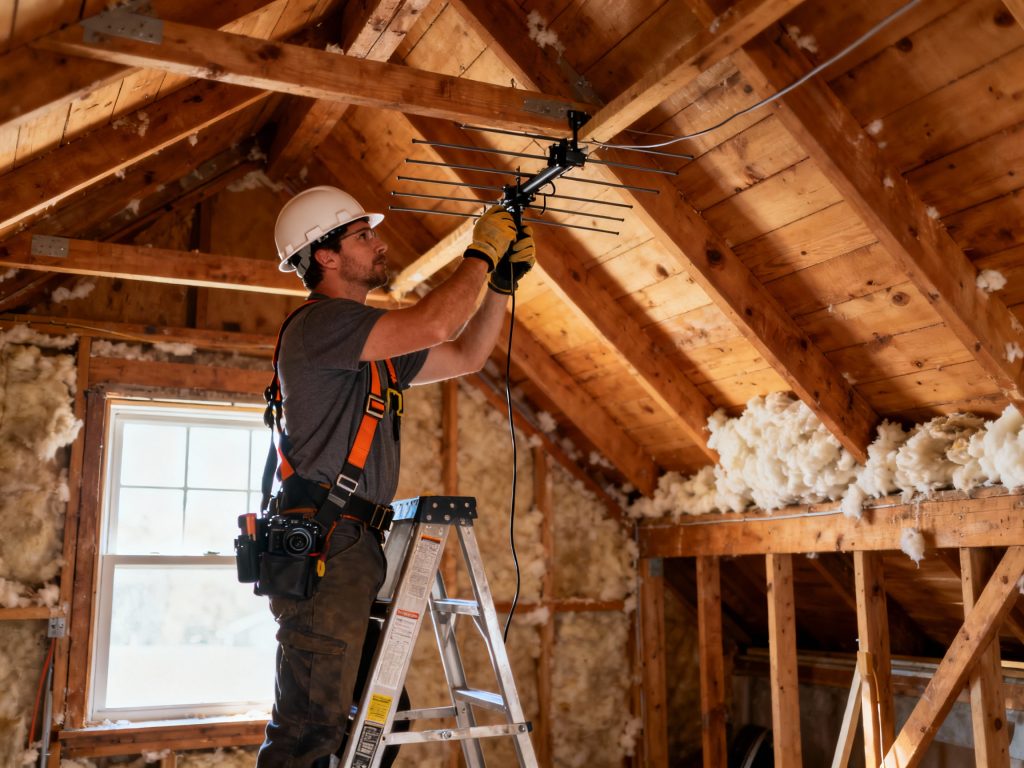
External TV antennas deliver superior reception but create aesthetic concerns, weather exposure challenges, and installation complications on Adelaide roofs. Attic antenna installation offers attractive alternatives—hidden from view, protected from weather, and accessible for adjustments without roof climbing.
If you’re asking how to install tv antenna in attic, you’re exploring a popular solution balancing signal reception with convenience and aesthetics. Attic installations work effectively in many Adelaide homes, though understanding significant limitations proves essential—roof materials block signals substantially, reducing reception compared to external mounting. Metal roofing creates near-total signal blockage, while tile and timber allow reasonable penetration with strength reduction.
Proper attic antenna installation requires understanding signal direction, optimal positioning within confined spaces, appropriate mounting techniques, and realistic expectations regarding performance compared to external alternatives. This comprehensive guide reveals attic installation procedures, equipment requirements, signal optimization strategies, and honest assessment of when attic placement provides acceptable reception versus requiring external mounting.
Key Takeaways
- Attic TV antenna installation provides weather protection and aesthetic benefits while accepting signal strength reduction from roof material interference compared to external mounting.
- Understanding how to install tv antenna in attic requires knowledge of signal direction toward transmission towers, roof material impact on reception, proper antenna positioning, and cable routing techniques.
- Essential equipment includes appropriate antenna type for attic use, mounting hardware securing antennas safely, quality coaxial cable, signal amplifiers compensating for losses, and proper grounding protection.
- Roof materials dramatically affect attic installation viability—timber and tile roofs allow reasonable signals while metal roofing blocks reception almost completely making attic installation impractical.
- Professional assessment determines whether specific homes suit attic installation considering roof construction, distance from transmission towers, desired channel reception, and alternative solutions if attic proves inadequate.
Overview
Attic antenna installation represents compromise solutions—trading some signal strength for weather protection, aesthetic advantages, and installation convenience. Understanding how to install tv antenna in attic involves examining roof material effects on signal penetration, transmission tower direction determination for optimal antenna positioning, mounting techniques within confined attic spaces, cable routing from attics to televisions, and signal amplification compensating for roof-induced losses.
Adelaide’s geographic position relative to transmission towers creates varied reception conditions—properties closer to Mount Lofty transmitters achieve better attic reception than distant locations. Roof construction throughout Adelaide spans metal sheeting blocking signals effectively, to timber and tile allowing reasonable penetration with strength reduction.
Professional attic installations optimize antenna positioning, employ proper mounting securing equipment safely, route cables protecting against damage, and incorporate amplification when necessary. This exploration reveals complete attic installation procedures, equipment selection criteria, optimization techniques, and realistic performance expectations guiding installation decisions.
Assessing Attic Installation Viability
Not all homes suit attic antenna installation—preliminary assessment prevents wasted effort on impractical situations.
Roof Material Evaluation:
Metal Roofing (Poor Viability): Steel or aluminum roofing reflects and blocks television signals almost completely. Attic installation under metal roofs rarely provides acceptable reception regardless of other factors. External mounting proves necessary for metal-roofed properties.
Tile Roofing (Good Viability): Terracotta or concrete tiles allow reasonable signal penetration. Adelaide’s common tile roofs suit attic installation well, accepting moderate signal strength reduction compared to external mounting.
Timber/Asbestos Roofing (Excellent Viability): Older timber shingle or asbestos cement roofing provides minimal signal interference. These materials allow strongest attic reception approaching external mounting performance.
Foil Insulation Impact: Reflective foil insulation materials commonly installed in Adelaide attics block signals substantially. Properties with extensive foil insulation experience reduced attic antenna effectiveness requiring careful positioning away from foil barriers or external mounting alternatives.
Our mission at Golden Antenna is to support our clients in enhancing their homes and lives through reliable and expert antenna installation. We guide clients to achieve seamless connectivity and a stress-free viewing experience, aligning every installation with their needs and lifestyle. The excitement of getting exactly what you want combines with the personable feeling of being understood, creating a safe, judgment-free zone where your entertainment needs receive proper attention.
How to Install TV Antenna in Attic
Complete Adelaide Home Installation Guide
| Category | Topic | Key Information | Professional Standards |
|---|---|---|---|
| Assessment | Metal Roofing | Steel or aluminum reflects and blocks signals almost completely | Attic installation under metal roofs rarely provides acceptable reception. External mounting proves necessary for metal-roofed properties. |
| Assessment | Tile Roofing | Terracotta or concrete tiles allow reasonable signal penetration | Adelaide’s common tile roofs suit attic installation well. Accept moderate signal strength reduction compared to external mounting. |
| Assessment | Timber/Asbestos Roofing | Provides minimal signal interference | Excellent viability for attic installation. Allow strongest attic reception approaching external mounting performance. |
| Assessment | Foil Insulation Impact | Reflective foil materials block signals substantially | Common in Adelaide attics. Reduce effectiveness requiring careful positioning away from foil barriers or external mounting alternatives. |
| Direction Finding | Adelaide Transmission Towers | Primary signals broadcast from Mount Lofty transmitter | Secondary transmitters exist throughout Adelaide. Determining which towers serve your location essential for proper antenna orientation. |
| Antenna Types | Compact Multi-Directional | Omnidirectional or wide-angle reception antennas | Work well in attics receiving signals from multiple directions. Compact designs fit confined spaces while capturing varied transmission sources. |
| Antenna Types | Directional Antennas | Focus reception toward primary towers | Properties close to transmission towers benefit. Provide maximum gain in single directions optimizing available signals. |
| Antenna Types | VHF/UHF Combination | Receive both VHF (channels 6-12) and UHF (channels 13+) | Complete coverage requires combination antennas. Handle all broadcast channels through single installations. |
| Equipment | Quality Coaxial Cable | RG6 coaxial cable rated for attic temperatures | Compression-style connectors providing reliable connections. Cable staples securing cables along joists every 1-2 meters. |
| Equipment | Signal Amplifiers | Compensate for roof losses and cable length | Distribution amplifiers if serving multiple TVs. Position near antennas where signal remains strongest before cable losses occur. |
| Installation | Signal Testing | Position antenna temporarily in various locations | Test reception quality before permanent mounting. Identify optimal positioning balancing signal strength with mounting practicality. |
| Installation | Mounting Structure | Secure brackets or masts to structural rafters | Distribute antenna weight properly. Avoid mounting to ceiling joists—use structural roof framing for adequate support. |
| Installation | Cable Routing | Run coaxial avoiding sharp bends and heat exposure | Secure cables preventing sagging or movement. Route through appropriate attic exits sealing penetrations against water and pests. |
| Installation | Grounding Protection | Proper grounding protects against static buildup | While attic antennas don’t require full lightning protection like external mounts, follow electrical code grounding requirements. |
| Optimization | Positioning Strategy | Mount at highest attic points maximizing elevation | Position away from foil insulation and metal ductwork. Maintain clearance from electrical wiring reducing interference. |
| Optimization | Amplification Strategy | Use amplification judiciously avoiding excessive amplification | Excessive amplification introduces noise and distortion. Amplify only when necessary compensating for specific losses. |
| Optimization | Interference Reduction | Identify interference from electrical equipment and LED lighting | Position antennas away from interference sources. Electronic devices, lighting, and equipment affect reception quality negatively. |
| Common Mistakes | Inadequate Structural Mounting | Securing to ceiling joists creates instability | Always mount to structural roof members providing adequate support. Ceiling joists support only ceiling materials—insufficient for antennas. |
| Common Mistakes | Excessive Cable Length | Unnecessarily long cable runs introduce avoidable losses | Route cables efficiently minimizing total length. Maintain neat installations without excessive cable. |
| Common Mistakes | Ignoring Roof Material Impact | Attempting installation under metal roofing wastes effort | Assess roof viability honestly before proceeding. Installations under signal-blocking materials destined to fail from the start. |
Determining Transmission Tower Direction
Optimal antenna positioning requires knowing precise transmission tower locations relative to your property.
Adelaide Transmission Tower Locations: Primary Adelaide television signals broadcast from Mount Lofty transmitter serving metropolitan areas. Secondary transmitters exist throughout Adelaide covering specific regions. Determining which towers serve your location proves essential for proper antenna orientation.
Direction Finding Methods:
Online Tools: Digital reception predictor tools available through Australian Government websites identify transmission towers serving specific addresses, signal strengths expected, and optimal antenna directions.
Smartphone Applications: Various apps utilize GPS coordinates identifying nearby transmission towers and providing compass bearings for antenna pointing.
Professional Assessment: Experienced installers combine official data with local knowledge accounting for terrain, buildings, and interference sources affecting specific Adelaide neighborhoods.
Test Reception: Temporary antenna positioning in various attic locations with portable TVs identifies strongest reception directions through practical testing before permanent installation.
Selecting Appropriate Attic Antennas
Not all antennas suit confined attic spaces—selecting appropriate types proves essential.
Compact Multi-Directional Antennas: Omnidirectional or wide-angle reception antennas work well in attics receiving signals from multiple directions. These compact designs fit confined spaces while capturing broadcasts from varied transmission sources.
Directional Antennas for Strong Signals: Properties close to transmission towers may use directional antennas within attics focusing reception toward primary towers. These provide maximum gain in single directions optimizing available signals.
VHF/UHF Combination Antennas: Complete coverage requires antennas receiving both VHF (channels 6-12) and UHF (channels 13+) frequencies. Combination antennas handle all broadcast channels through single installations.
Amplified Antenna Options: Some antennas incorporate built-in amplifiers compensating for attic signal losses. These prove valuable in marginal reception areas or under challenging roof materials.
Size Considerations: Verify antenna dimensions fit attic access openings and positioning locations. Large external antennas won’t fit through standard attic hatches or maneuver within confined roof spaces.
Essential Installation Equipment
Proper attic installation requires specific tools and materials beyond basic antenna hardware.
Mounting Hardware:
- Antenna mounting brackets or masts
- Timber or metal mounting plates distributing loads across rafters
- Appropriate fasteners (timber screws for rafter mounting)
- Adjustable mounting systems allowing positioning adjustments
Cable and Connections:
- Quality RG6 coaxial cable rated for attic temperatures
- Compression-style connectors providing reliable connections
- Cable staples or clips securing cables along joists
- Weather-resistant exterior cable for external routing portions
Signal Processing:
- Distribution amplifiers if serving multiple TVs
- Signal splitters rated for appropriate frequency ranges
- Inline amplifiers compensating for cable length and roof losses
- Power injectors for amplifier systems
Safety Equipment:
- Adequate attic lighting for safe work
- Protective masks against insulation dust
- Gloves protecting from fiberglass insulation
- Secure footing avoiding stepping between joists
Step-by-Step Installation Procedure
Systematic installation procedures deliver optimal results safely and efficiently.
1. Access Preparation: Clear attic access routes removing stored items interfering with equipment transport and work areas. Verify safe working conditions with adequate lighting and ventilation.
2. Signal Testing: Before permanent mounting, position antenna temporarily in various attic locations testing reception quality. Identify optimal positioning balancing signal strength with mounting practicality.
3. Mounting Structure Installation: Secure mounting brackets or masts to structural rafters distributing antenna weight properly. Avoid mounting to ceiling joists supporting only ceiling materials—use structural roof framing.
4. Antenna Assembly and Positioning: Assemble antenna according to manufacturer instructions. Mount antenna on prepared structure, orienting toward transmission towers based on previous direction findings.
5. Cable Routing: Run coaxial cable from antenna to attic exit points avoiding sharp bends, excessive heat exposure, and areas where cables might get damaged by stored items. Secure cables every 1-2 meters preventing sagging or movement.
6. Attic Exit and External Routing: Route cables through appropriate attic exits—typically eaves, soffit penetrations, or wall cavities leading to TV locations. Seal penetrations preventing water infiltration and pest entry.
7. Amplifier Installation: If using signal amplifiers, position them near antennas where signal remains strongest before cable losses occur. Install power injectors at easily accessible locations for maintenance.
8. Grounding and Protection: While attic antennas don’t require full lightning protection like external mounts, proper grounding protects against static buildup. Follow electrical code grounding requirements.
9. Connection and Testing: Connect cables to televisions performing channel scans. Test all desired channels verifying acceptable reception quality across programming.
10. Final Adjustments: Based on reception testing, make fine positioning adjustments optimizing signal quality. Document final antenna orientation for future reference.
Signal Optimization Techniques
Maximizing attic antenna performance requires attention to multiple factors beyond basic installation.
Positioning Optimization:
- Mount antennas at highest attic points maximizing elevation
- Position away from foil insulation and metal ductwork
- Maintain clearance from electrical wiring reducing interference
- Orient precisely toward transmission towers using compass bearings
Amplification Strategy: Use amplification judiciously—excessive amplification introduces noise and distortion. Amplify only when necessary compensating for specific losses rather than automatically including amplifiers.
Cable Quality: Invest in quality RG6 cable with proper shielding. Cheap cable introduces losses negating advantages of optimal antenna positioning. Keep cable runs as short as practical minimizing signal degradation.
Interference Reduction: Identify and address interference sources including electrical equipment, LED lighting, and electronic devices. Positioning antennas away from these sources improves reception quality.
Common Attic Installation Mistakes
Inadequate Structural Mounting: Securing antennas to ceiling joists or inadequate framing creates instability. Always mount to structural roof members providing adequate support.
Excessive Cable Length: Unnecessarily long cable runs introduce avoidable signal losses. Route cables efficiently minimizing total length while maintaining neat installations.
Ignoring Roof Material Impact: Attempting attic installation under metal roofing wastes effort. Assess roof viability honestly before proceeding with installations destined to fail.
Poor Cable Management: Unsecured cables sag, get damaged by stored items, or create safety hazards. Proper cable securing prevents future problems.
Inadequate Ventilation Consideration: Attic heat affects equipment longevity. Position antennas and amplifiers considering temperature exposure, avoiding locations near roof peaks where heat concentrates.
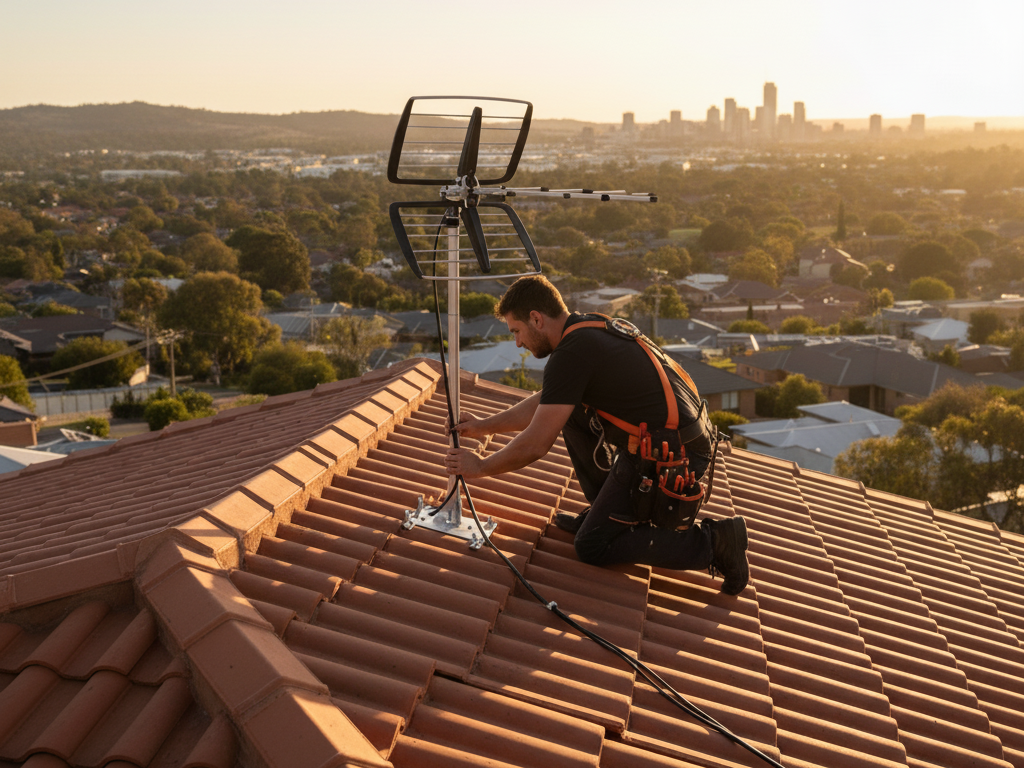
When External Mounting Proves Necessary
Despite attic installation advantages, some situations require external mounting for acceptable reception.
Metal Roof Properties: External mounting provides only viable solution under metal roofing blocking attic signals completely.
Weak Signal Areas: Properties distant from transmission towers or in challenging terrain may require external mounting maximizing available signal strength.
Multiple TV Service: Serving numerous televisions throughout large homes may demand external mounting providing strongest signals supporting distribution systems.
Consumer Tips for Attic Installation
- Honestly assess roof material—don’t waste effort on metal-roofed properties
- Test reception temporarily before permanent mounting
- Invest in quality cable and connectors—cheap components negate installation effort
- Document antenna orientation for future adjustments
- Leave access routes clear for future maintenance or adjustments
- Consider professional installation—attic work presents safety challenges
- Verify acceptable reception on all desired channels before finalizing installation
- Maintain realistic expectations—attic performance rarely matches external mounting
When considering how to install tv antenna in attic, proper assessment, equipment selection, and installation technique determine success. Golden Antenna provides expert attic antenna installation throughout Adelaide, evaluating roof viability, optimizing antenna positioning, and executing professional installations.
Located in Adelaide S.A. 5000 and reachable at 0403 711 983, we assess whether attic installation suits your property, recommend appropriate equipment, and complete installations delivering optimal attic reception. Our experience with Adelaide’s varied roof types and reception conditions guides realistic expectations and successful installations.
Frequently Asked Questions
Q: Will attic antennas receive as well as roof-mounted antennas?
A: No—roof materials reduce signal strength compared to external mounting. However, attic installation often provides acceptable reception while offering weather protection and aesthetic advantages worth modest signal reduction.
Q: Can I install attic antennas under metal roofing?
A: Metal roofing blocks signals almost completely making attic installation impractical. External mounting proves necessary for metal-roofed properties requiring antenna reception.
Q: Do attic antennas require different types than external antennas?
A: Many external antennas work in attics when size allows attic entry and positioning. Compact designs suit confined attic spaces better than large external models.
Q: How do I know which direction to point my attic antenna?
A: Online reception prediction tools identify transmission towers serving your address. Professional installers combine official data with local experience optimizing antenna orientation for specific properties.
Q: Will attic heat damage antennas or equipment?
A: Quality antennas tolerate attic temperatures. However, extreme heat affects electronic components including amplifiers. Position equipment considering thermal exposure and select temperature-rated components.
Conclusion
Understanding how to install tv antenna in attic reveals that attic installation provides viable alternatives to external mounting when roof materials allow reasonable signal penetration. Assessment procedures determine viability based on roof construction, transmission tower proximity, and desired channel reception.
Proper installation involves identifying optimal positioning through testing, securing antennas to structural framing, routing quality cables efficiently, and incorporating amplification when necessary. Equipment selection emphasizes compact antennas fitting attic spaces with appropriate reception characteristics. Common mistakes include inadequate mounting, excessive cable lengths, and attempting installation under signal-blocking metal roofing.
Optimization techniques maximize available reception through precise positioning, quality components, and interference reduction. Professional installation provides expertise with attic work safety, reception optimization, and realistic performance assessment. Golden Antenna delivers expert attic antenna installation throughout Adelaide. Contact us at 0403 711 983 for professional assessment and installation optimizing your attic antenna reception.
