

Free-to-air television remains popular throughout Adelaide despite streaming service proliferation—reliable antenna reception delivers local news, sports, and quality programming without subscription costs. If you’re asking how to install a tv antenna in adelaide, you’re seeking solutions providing optimal reception for ABC, Seven, Nine, Ten, and SBS channels broadcast from Mount Lofty and supplementary transmission towers.
Adelaide’s unique geography creates varied reception challenges—properties in hills face different conditions than coastal locations, while CBD high-rises experience interference from surrounding structures. Understanding transmission tower locations specific to Adelaide, selecting appropriate antennas for local conditions, proper installation techniques accounting for Adelaide’s climate, and optimization strategies maximizing reception quality all contribute to successful installations.
This comprehensive guide reveals Adelaide-specific antenna installation knowledge, equipment recommendations suited for local conditions, professional installation procedures, and realistic expectations for reception quality across different Adelaide regions.
Key Takeaways
- Adelaide TV antenna installation requires understanding Mount Lofty transmission tower location, regional signal variations, appropriate antenna types for local conditions, and proper installation techniques.
- Understanding how to install a tv antenna in adelaide involves knowledge of transmission directions, antenna selection for Adelaide’s climate, mounting methods for varied roof types, and cable routing protecting against weather.
- Primary Adelaide transmission comes from Mount Lofty (Crafers) serving metropolitan areas, with supplementary transmitters at Sellicks Beach, Golden Grove, and Mount Barker covering specific regions.
- Essential installation factors include antenna orientation toward transmission sources, weatherproof mounting securing equipment against Adelaide winds, quality cable preventing signal degradation, and proper grounding for storm protection.
- Professional installation provides expertise with Adelaide’s geography, experience with local building types, appropriate equipment for regional conditions, and guaranteed results optimizing reception quality.
Overview
Adelaide’s television landscape presents specific characteristics affecting antenna installation—Mount Lofty’s central location provides strong signals throughout most metropolitan areas, while outlying suburbs and Adelaide Hills properties face varied reception conditions.
Understanding how to install a tv antenna in adelaide requires examining transmission tower locations relative to Adelaide suburbs, signal strength variations across different regions, antenna types suited for Adelaide’s Mediterranean climate, and installation techniques accounting for local roof construction and weather patterns.
Adelaide’s housing diversity spans heritage cottages with tile roofs to modern homes with metal sheeting, each demanding different mounting approaches. Seasonal wind patterns, coastal salt exposure affecting coastal properties, and summer heat impacting equipment all influence installation decisions. Professional installers familiar with Adelaide conditions optimize antenna selection, positioning, and mounting delivering reliable long-term performance. This exploration reveals Adelaide-specific installation knowledge, regional reception characteristics, equipment recommendations, and professional techniques ensuring optimal free-to-air reception.
Adelaide Transmission Tower Locations
Understanding transmission infrastructure helps optimize antenna orientation throughout Adelaide regions.
Mount Lofty (Crafers) – Primary Transmitter: Located in Adelaide Hills, Mount Lofty broadcasts all major networks serving metropolitan Adelaide. Most Adelaide properties receive strongest signals from this primary source positioned southeast of CBD.
Transmission coverage characteristics:
- Serves metropolitan Adelaide comprehensively
- Strongest signals in northern, western, and central suburbs
- Some southern suburbs receive better signals from Sellicks Beach
- Adelaide Hills properties may face terrain challenges despite proximity
Supplementary Transmission Sites:
Sellicks Beach Transmitter: Serves southern Adelaide including Seaford, Hallett Cove, and surrounding areas. Properties south of Marion often receive stronger signals from Sellicks Beach than Mount Lofty.
Golden Grove Transmitter: Fills coverage gaps in northeastern suburbs where terrain blocks Mount Lofty signals. Properties around Golden Grove, Modbury, and Tea Tree Gully may benefit from this transmitter.
Mount Barker Transmitter: Serves Adelaide Hills communities where Mount Lofty signals encounter terrain obstacles. Mount Barker, Stirling, and surrounding hill suburbs often use this transmitter.
Our mission at Golden Antenna is to support our clients in enhancing their homes and lives through reliable and expert antenna installation. We guide clients to achieve seamless connectivity and a stress-free viewing experience, aligning every installation with their needs and lifestyle. The excitement of getting exactly what you want combines with the personable feeling of being understood, creating a safe, judgment-free zone where your entertainment needs receive proper attention.
Adelaide Homeowner’s Guide to TV Antenna Installation
Professional Installation Standards for Adelaide Regions
| Category | Topic | Key Information | Professional Standards |
|---|---|---|---|
| Transmission | Mount Lofty (Crafers) | Primary transmitter serving metropolitan Adelaide | Located in Adelaide Hills. Broadcasts all major networks. Strongest signals in northern, western, and central suburbs. |
| Transmission | Sellicks Beach Transmitter | Serves southern Adelaide suburbs | Properties south of Marion often receive stronger signals. Covers Seaford, Hallett Cove, and surrounding areas. |
| Transmission | Golden Grove Transmitter | Fills coverage gaps in northeastern suburbs | Where terrain blocks Mount Lofty signals. Benefits Golden Grove, Modbury, and Tea Tree Gully properties. |
| Transmission | Mount Barker Transmitter | Serves Adelaide Hills communities | Where Mount Lofty signals encounter terrain obstacles. Mount Barker, Stirling, and surrounding hill suburbs rely on this transmitter. |
| Regional | Northern Suburbs | Generally excellent reception from Mount Lofty | Salisbury, Elizabeth, Gawler. Flat terrain provides unobstructed signal paths. Standard antennas deliver strong signals with minimal amplification. |
| Regional | Western Suburbs | Excellent reception across most areas | Coastal properties require corrosion-resistant materials. Henley Beach, West Lakes, Grange experience salt exposure. |
| Regional | Southern Suburbs | Mixed reception – Mount Lofty or Sellicks Beach | Marion, Hallett Cove, Seaford. Some locations require dual-antenna systems or high-gain antennas for optimal reception. |
| Regional | Adelaide Hills | Challenging despite Mount Lofty proximity | Terrain creates signal shadows. Stirling, Crafers, Mount Barker require careful positioning or specialized high-gain antennas. |
| Antenna Types | Standard VHF/UHF | Combination antennas receive all broadcast channels | Suit most metropolitan Adelaide properties with reasonable Mount Lofty signals. Reliable performance at moderate costs. |
| Antenna Types | High-Gain Antennas | Focus reception toward transmission sources | Properties in fringe areas, Adelaide Hills, or with terrain challenges benefit. Increased gain compensates for weaker signals. |
| Antenna Types | Coastal-Rated Antennas | Marine-grade with corrosion-resistant materials | Western suburbs coastal properties require these. Standard antennas deteriorate rapidly from salt exposure near beaches. |
| Roof Types | Tile Roofing (Most Common) | Terracotta and concrete tiles dominate Adelaide | Mounting requires tile penetration with proper flashing. Professional sealing protects against winter rainfall. |
| Roof Types | Metal Roofing | Modern homes increasingly feature metal roofing | Specialized brackets attach to roof structure. Rubber-sealed penetrations prevent leaks. Cannot compromise waterproofing. |
| Weather | Wind Considerations | Adelaide experiences strong winds, especially summer | Antenna mounting requires adequate bracing and secure attachment withstanding wind loading. Coastal areas demand reinforced installations. |
| Weather | Summer Heat Effects | Hot Adelaide summers affect antenna components | Quality UV-resistant cables essential. Heat-tolerant equipment selection prevents premature degradation. |
| Professional | Secure Mounting | Proper roof penetration with weatherproof flashing | Secure fastening to structural roof members. Adequate bracing against wind loading. Proper mast installation maintaining stability. |
| Professional | Grounding and Safety | Protects against lightning strikes and static buildup | Professional installations meet electrical code requirements for antenna grounding. Protects property and occupants from electrical hazards. |
| Challenges | Hills Terrain Obstacles | Adelaide Hills topography creates signal shadows | Solutions include antenna height increases. High-gain equipment or alternative transmitter targeting required. |
| Challenges | Coastal Corrosion | Salt exposure rapidly corrodes standard materials | Coastal installations require marine-grade equipment. Regular maintenance inspections replace corroded components before failures occur. |
| Challenges | Heritage Property Restrictions | Some Adelaide suburbs have heritage overlays | Restrict external antenna visibility. Professional installers navigate using discreet mounting locations or compliant equipment selections. |
Regional Reception Characteristics
Adelaide’s geography creates varied reception conditions across different areas.
Northern Suburbs (Salisbury, Elizabeth, Gawler): Generally excellent reception from Mount Lofty with minimal interference. Flat terrain provides unobstructed signal paths. Standard antennas deliver strong signals requiring minimal amplification.
Eastern Suburbs (Burnside, Norwood, Magill): Strong reception with Mount Lofty positioned favorably. Some properties face interference from surrounding buildings requiring antenna height optimization.
Western Suburbs (Henley Beach, West Lakes, Grange): Excellent reception across most areas. Coastal properties require corrosion-resistant antenna materials due to salt exposure. Standard installations provide reliable performance.
Southern Suburbs (Marion, Hallett Cove, Seaford): Mixed reception—northern southern suburbs receive Mount Lofty well while properties further south benefit from Sellicks Beach transmitter. Some locations require dual-antenna systems or high-gain antennas.
Adelaide Hills (Stirling, Crafers, Mount Barker): Challenging reception despite Mount Lofty proximity. Terrain creates signal shadows requiring careful antenna positioning. Some properties need specialized high-gain antennas or rely on Mount Barker transmitter.
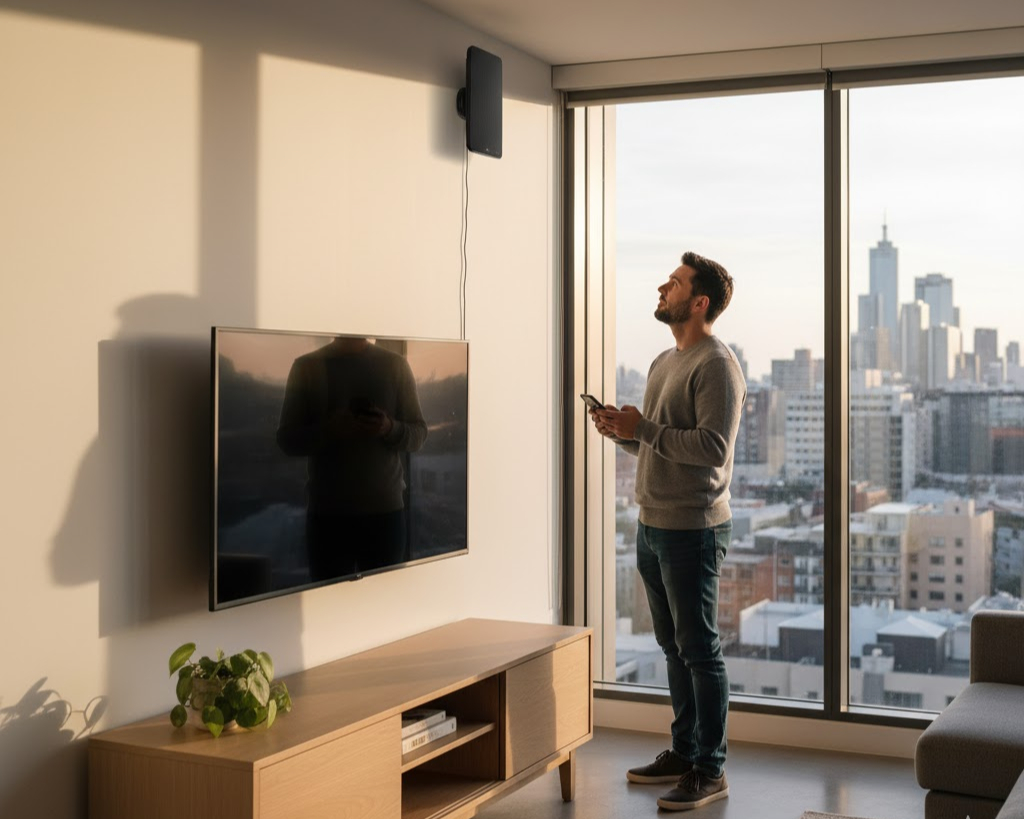
CBD and Inner City: Strong signals with interference from surrounding structures. High-rise apartments require professional assessment determining optimal antenna positioning avoiding building interference.
Selecting Appropriate Antennas for Adelaide
Adelaide’s conditions influence antenna selection beyond basic reception requirements.
Standard VHF/UHF Antennas: Combination antennas receiving all broadcast channels suit most metropolitan Adelaide properties with reasonable Mount Lofty signals. These provide reliable performance at moderate costs.
High-Gain Antennas: Properties in fringe areas, Adelaide Hills, or locations with terrain challenges benefit from high-gain antennas focusing reception toward transmission sources. Increased gain compensates for weaker signals or obstacles.
Coastal-Rated Antennas: Western suburbs coastal properties require marine-grade antennas with corrosion-resistant materials and coatings. Standard antennas deteriorate rapidly from salt exposure near beaches.
Compact Antennas: Properties close to Mount Lofty with strong signals may use compact antennas maintaining aesthetic appeal. These suit modern architectural homes where large antennas appear intrusive.
Amplified Antenna Systems: Areas with marginal signals benefit from masthead amplifiers boosting weak signals. However, excessive amplification in strong-signal areas introduces problems—use amplification judiciously based on actual reception testing.
Adelaide-Specific Installation Considerations
Local factors influence installation approaches throughout Adelaide properties.
Roof Types Common in Adelaide:
Tile Roofing (Most Common): Terracotta and concrete tiles dominate Adelaide roofs. Mounting requires tile penetration with appropriate flashing preventing water infiltration. Professional installations include proper sealing protecting against Adelaide’s winter rainfall.
Metal Roofing (Increasing Prevalence): Modern homes increasingly feature metal roofing. Mounting involves specialized brackets attaching to roof structure without compromising waterproofing. Metal roofs require rubber-sealed penetrations preventing leaks.
Asbestos Cement (Older Properties): Heritage Adelaide homes may feature asbestos roofing requiring specialist handling. Professional assessment and appropriate safety measures prove essential avoiding fiber release during installations.
Wind Considerations: Adelaide experiences strong winds, particularly during summer. Antenna mounting requires adequate bracing and secure attachment withstanding wind loading. Coastal areas face even stronger wind exposure demanding reinforced installations.
Summer Heat Effects: Adelaide’s hot summers affect antenna components and cabling. Quality UV-resistant cables and heat-tolerant equipment selection prevents premature degradation from temperature exposure.
Winter Weather Protection: While Adelaide winters remain mild compared to other capitals, rainfall and occasional storms demand proper weatherproofing. All connections require weather-sealed protection preventing moisture-related failures.
Professional Installation Procedures
Quality installations follow systematic procedures optimizing reception and longevity.
Site Assessment: Professional installers evaluate property location relative to transmission towers, identify potential interference sources, assess roof access and mounting conditions, and determine optimal antenna positioning.
Antenna Selection and Orientation: Based on assessment, professionals select appropriate antennas for specific property conditions and reception requirements. They orient antennas precisely toward relevant transmission towers using compass bearings and signal strength measurements.
Secure Mounting Installation: Professional mounting involves proper roof penetration with weatherproof flashing, secure fastening to structural roof members, adequate bracing against wind loading, and proper mast installation maintaining antenna stability.
Quality Cable Installation: Professionals route quality RG6 coaxial cable protecting against weather exposure, UV degradation, and physical damage. Cables receive proper support, appropriate drip loops preventing water entry, and weatherproof connections throughout.
Grounding and Safety: Proper grounding protects against lightning strikes and static buildup. Professional installations meet electrical code requirements for antenna grounding protecting property and occupants.
Signal Testing and Optimization: After installation, professionals perform comprehensive channel scans verifying reception quality across all desired channels. They make fine positioning adjustments optimizing overall performance.
Common Adelaide Installation Challenges
Hills Properties with Terrain Obstacles: Adelaide Hills topography creates signal shadows where terrain blocks direct paths from transmission towers. Solutions include antenna height increases, high-gain equipment, or alternative transmitter targeting.
Coastal Corrosion: Salt exposure rapidly corrodes standard antenna materials. Coastal installations require marine-grade equipment and regular maintenance inspections replacing corroded components before failures occur.
Multi-Story Homes: Distributing signals to multiple levels throughout large Adelaide homes requires proper splitters, adequate cable quality, and possibly distribution amplifiers maintaining signal strength to all outlets.
Heritage Property Restrictions: Some Adelaide suburbs have heritage overlays restricting external antenna visibility. Professional installers navigate these restrictions using discreet mounting locations or compliant equipment selections.
DIY Installation Risks
Safety Hazards: Roof work presents serious fall risks. Adelaide’s pitched tile roofs prove particularly challenging for inexperienced individuals. Professional installers possess proper safety equipment and training working safely at heights.
Improper Orientation: Without local knowledge and proper equipment, DIY installations often feature suboptimal antenna orientation reducing reception quality unnecessarily.
Inadequate Weatherproofing: Amateur installations frequently feature poor weatherproofing allowing water infiltration causing equipment failures and potential roof damage from leaks.
Electrical Code Violations: Improper grounding or electrical work violates building codes creating safety hazards and insurance complications.
Consumer Tips for Adelaide Antenna Installation
- Determine which transmission tower serves your Adelaide suburb before selecting equipment
- Consider coastal ratings for antennas in western suburbs near beaches
- Verify installers possess experience with Adelaide conditions and local geography
- Request proper weatherproofing given Adelaide’s winter rainfall patterns
- Ensure adequate wind bracing for exposed locations and coastal areas
- Check reception on all desired channels before finalizing installation
- Maintain clear roof access for future maintenance or adjustments
- Consider professional installation—safety risks and technical requirements justify expert service
When seeking how to install a tv antenna in adelaide, professional expertise familiar with local transmission towers, regional reception characteristics, and Adelaide-specific conditions delivers optimal results.
Golden Antenna provides expert antenna installation throughout all Adelaide regions from coastal suburbs to Adelaide Hills.
Located in Adelaide S.A. 5000 and reachable at 0403 711 983, we bring comprehensive knowledge of Adelaide transmission infrastructure, experience with local building types, and proven techniques optimizing reception. Our installations account for Adelaide’s climate, wind conditions, and regional signal variations delivering reliable long-term free-to-air reception.
Frequently Asked Questions
Q: Which direction should my Adelaide antenna point?
A: Most metropolitan Adelaide properties orient antennas toward Mount Lofty (southeast from most suburbs). However, southern suburbs may target Sellicks Beach while Adelaide Hills properties might use Mount Barker transmitter. Professional assessment determines optimal orientation.
Q: Do I need special antennas for Adelaide Hills properties?
A: Adelaide Hills often require high-gain antennas compensating for terrain challenges despite proximity to Mount Lofty. Terrain creates signal shadows demanding more capable equipment than metropolitan locations.
Q: How does Adelaide’s weather affect antenna installation?
A: Adelaide’s summer heat demands UV-resistant cables while winter rainfall requires proper weatherproofing. Wind loading, particularly in exposed locations, necessitates secure bracing. Coastal salt exposure requires corrosion-resistant materials.
Q: Can I receive all channels throughout Adelaide?
A: Most Adelaide metropolitan areas receive all major networks reliably. However, fringe areas, Adelaide Hills, and some southern suburbs may experience reception challenges requiring professional solutions.
Q: How long do antenna installations last in Adelaide conditions?
A: Quality professional installations with appropriate materials last 10-15+ years in Adelaide conditions. Coastal locations require more frequent maintenance due to salt corrosion affecting equipment longevity.
Conclusion
Understanding how to install a tv antenna in adelaide reveals that successful installation requires knowledge of Adelaide’s transmission infrastructure centered on Mount Lofty, regional reception variations across different suburbs, appropriate equipment for local climate conditions, and proper installation techniques accounting for Adelaide’s weather patterns.
Mount Lofty serves most metropolitan areas while supplementary transmitters cover specific regions. Adelaide’s geography creates varied reception conditions from excellent in northern suburbs to challenging in Adelaide Hills. Equipment selection considers Adelaide’s summer heat, winter rainfall, wind loading, and coastal salt exposure where applicable.
Professional installation provides expertise with local conditions, proper weatherproofing, secure mounting, and optimized reception. DIY installations present safety risks and technical challenges justifying professional service. Golden Antenna delivers expert antenna installation throughout Adelaide. Contact us at 0403 711 983 for professional installation optimized for your specific Adelaide location.
