
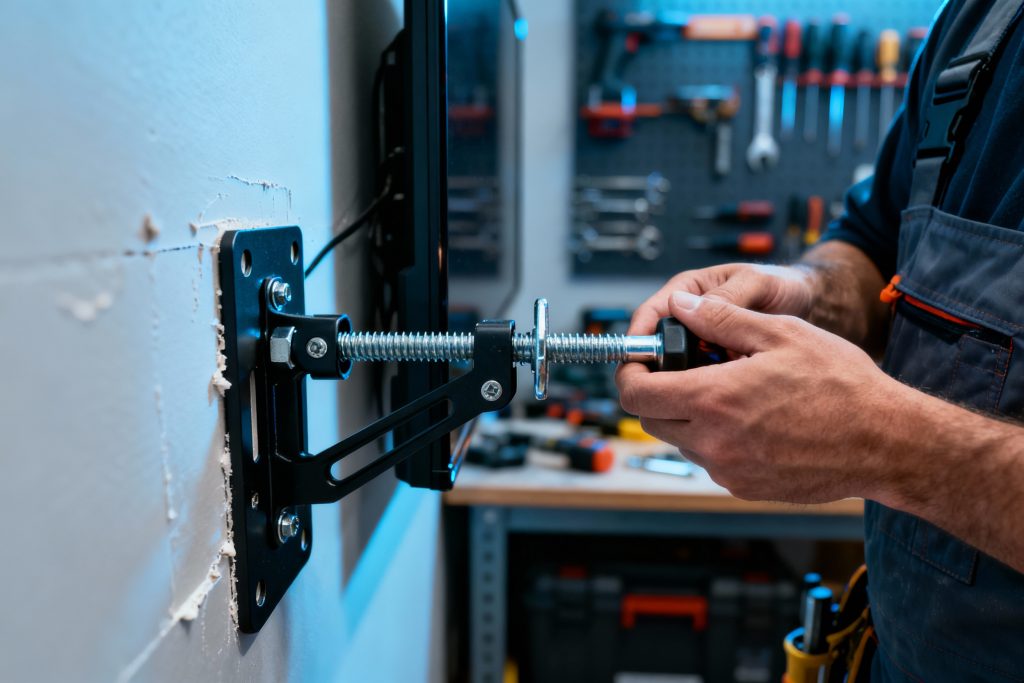
Your perfect TV mounting location sits exactly where you want it—then stud detection reveals no timber framing behind that ideal position, only hollow plasterboard. If you’re asking can you mount tv without studs in wall in Adelaide, you’re facing a common frustration where optimal viewing positions don’t align conveniently with structural framing. While stud mounting provides superior strength and reliability, alternative methods exist for mounting televisions on hollow walls using specialized anchors rated for specific weight capacities.
Adelaide’s modern plasterboard construction creates these situations frequently, particularly in open-plan homes where room layouts don’t coordinate with hidden framing patterns. Understanding hollow-wall anchor options, weight limitations requiring strict adherence, proper installation techniques maximizing holding strength, and when professional assessment proves essential helps achieve secure mounting despite lacking stud backing. This guide reveals proven alternative mounting solutions, their capabilities and limitations, safety considerations, and honest assessment of when stud mounting remains the only acceptable approach.
Key Takeaways
- Mounting TVs without studs proves possible using specialized hollow-wall anchors rated for specific weights, though accepting significant limitations compared to stud-mounted installations.
- Understanding can you mount tv without studs in wall in Adelaide requires knowledge of anchor types, strict weight restrictions, plasterboard thickness considerations, and safety margin requirements.
- Heavy-duty toggle bolts, molly bolts, and snaptoggle anchors provide the strongest hollow-wall mounting options supporting moderate TV weights when properly installed.
- Critical limitations include maximum safe weights around 20-25kg total regardless of anchor ratings, TV size restrictions typically capping at 50-55 inches, and fixed-mount-only recommendations.
- Professional assessment determines whether specific situations safely accommodate stud-free mounting or whether alternative positioning, reinforcement, or stud mounting proves necessary.
Overview
The reality of modern Adelaide construction creates frequent misalignment between optimal TV mounting positions and underlying structural framing. Understanding can you mount tv without studs in wall in Adelaide involves examining specialized hollow-wall anchor technologies designed for plasterboard applications, realistic weight capacity limitations these systems provide, proper installation techniques maximizing available holding strength, and honest evaluation of when alternatives prove inadequate requiring different approaches.
Quality hollow-wall anchors distribute TV weight across broader plasterboard surface areas, compensating somewhat for lacking solid backing. However, fundamental physics limits how much weight hollow walls safely support—no anchor system completely replaces solid stud mounting strength. Adelaide’s plasterboard construction typically uses 10mm or 13mm sheets, with thickness affecting anchor holding capacity substantially.
Professional installers assess whether specific TV weight, wall condition, and mounting requirements fall within safe hollow-wall mounting parameters or demand alternative solutions. This exploration reveals available options, their realistic capabilities, and critical safety considerations.
Hollow-Wall Anchor Options
Several specialized anchor types provide hollow-wall mounting capability, each offering different strength characteristics.
Toggle Bolts (Best Overall Strength): Spring-loaded wing mechanisms flip open behind plasterboard, distributing loads across large surface areas inside wall cavities.
Characteristics include:
- Maximum holding strength among hollow-wall options
- Rated capacities: 20-35kg per anchor (in ideal conditions)
- Require larger drill holes (12-15mm) for wing passage
- Create permanent installations—removal leaves large holes
- Installation requires wings passing through holes before expansion
Snaptoggle Anchors (Premium Option): Metal channel systems offering superior performance compared to standard toggles through stronger materials and better load distribution.
Advantages involve:
- Holding capacities: 25-40kg per anchor in 13mm plasterboard
- Allow bolt removal without losing anchor channel
- Facilitate mount adjustments without reinstallation
- Professional installers prefer for quality hollow-wall applications
- Higher cost than standard toggles ($3-5 per anchor vs $1-2)
Molly Bolts (Moderate Strength): Expansion anchors featuring sleeves that deform as bolts tighten, gripping plasterboard from behind.
Characteristics include:
- Rated capacities: 15-25kg per anchor
- Require precise installation depth for proper expansion
- More forgiving installation than toggles
- Suitable for lighter TV applications
- Set flush with wall surface when properly installed
Self-Drilling Anchors (Minimal Strength): Plastic or metal anchors creating their own holes during installation.
Limitations involve:
- Adequate only for very light applications
- Not recommended for TV mounting regardless of marketing claims
- Holding capacity inadequate for television weights
- Risk sudden failure under sustained loads
Our mission at Golden Antenna is to support our clients in enhancing their homes and lives through reliable and expert antenna installation. We guide clients to achieve seamless connectivity and a stress-free viewing experience, aligning every installation with their needs and lifestyle. The excitement of getting exactly what you want combines with the personable feeling of being understood, creating a safe, judgment-free zone where your entertainment needs receive proper attention.
TV Mounting Without Studs in Adelaide
Alternative Methods and Solutions Guide
| Category | Topic | Key Information | Professional Standards |
|---|---|---|---|
| Anchor Types | Toggle Bolts | Spring-loaded wings flip open behind plasterboard | Maximum holding strength among hollow-wall options. Rated 20-35kg per anchor. Require 12-15mm drill holes. Create permanent installations. |
| Anchor Types | Snaptoggle Anchors | Metal channel systems offering superior performance | Professional installers prefer for quality applications. Hold 25-40kg per anchor. Allow bolt removal without losing anchor. |
| Anchor Types | Molly Bolts | Expansion anchors featuring deforming sleeves | Rated 15-25kg per anchor. Require precise installation depth for proper expansion. Suitable for lighter TV applications. |
| Anchor Types | Self-Drilling Anchors | NOT recommended for TV mounting | Adequate only for very light applications. Holding capacity inadequate for television weights. Risk sudden failure under sustained loads. |
| Weight Limits | Maximum TV Weight | 20-25kg total (including mount) safe limit | Typical size limitation: 50-55 inch screens maximum. Safety factor: Use 1.5-2x rated capacity minimum. Multiple anchor distribution essential. |
| Weight Limits | Anchor Rating vs Reality | Manufacturers rate under ideal laboratory conditions | Real installations rarely achieve ideal conditions. Reduces actual holding capacity substantially from rated specifications. |
| Weight Limits | Dynamic Loading | Building vibrations and accidental bumps create stress | Static weight represents only one stress factor. Conservative weight limits accommodate real-world dynamic loads and temperature-induced movements. |
| Installation | Plasterboard Thickness | Measure actual thickness using exploratory hole | Anchor selection depends on accurate thickness knowledge. 10mm versus 13mm substantially affects holding capacity for all anchor types. |
| Installation | Anchor Spacing | Distribute anchors 30-40cm apart optimally | Maximize plasterboard surface area engagement. Proper spacing prevents overlapping stress zones reducing combined holding capacity. |
| Installation | Perpendicular Drilling | Maintain perfectly perpendicular drill angles | Angled drilling creates irregular holes reducing anchor holding capacity. Introduces leverage that accelerates failure under load. |
| Installation | Edge Distance | Position anchors minimum 75-100mm from edges | Edge proximity concentrates stress causing edge cracking and premature failure. Adequate distance distributes loads safely. |
| Mount Types | Fixed Mounts Only | Only recommended type for hollow-wall mounting | Simple fixed brackets create minimal leverage. Static loading without movement provides maximum safety. Highest weight capacity for given anchor system. |
| Mount Types | Tilting Mounts | Marginal suitability – very light TVs only (under 15kg) | Tilting mechanisms add movement and leverage stressing anchors. Most professional installers discourage tilting mounts on hollow walls. |
| Mount Types | Full-Motion Articulating | NOT RECOMMENDED – Never use on hollow walls | Extended arms create enormous leverage multiplying weight. Exceeds safe capacity regardless of anchor quality. Failure likelihood approaches certainty. |
| Wall Condition | Moisture Damage | Water exposure softens gypsum dramatically | Moisture-affected plasterboard lacks adequate strength for any TV mounting. Address moisture sources and replace damaged sections first. |
| Wall Condition | Age-Related Deterioration | Decades of humidity exposure degrades plasterboard | Older plasterboard may have degraded through temperature cycling and building movements. Requires careful assessment before hollow-wall mounting. |
| Reinforcement | Backing Board Installation | Install timber or plywood backing behind plasterboard | Creates solid mounting surfaces. Requires cutting plasterboard and securing backing to studs. Substantial work justified for critical positioning. |
| Reinforcement | Structural Modifications | Adding studs or blocking between existing framing | Provides proper mounting support. Substantial renovation worthwhile for permanent installations in specific critical locations. |
Realistic Weight Limitations
Understanding actual safe weight capacities prevents dangerous installations despite optimistic anchor ratings.
Anchor rating versus real-world capacity: Manufacturers rate anchors under ideal laboratory conditions—perfect plasterboard, optimal installation, perpendicular loading. Real installations rarely achieve these ideal conditions, reducing actual holding capacity substantially.
Safe weight guidelines for hollow-wall mounting:
- Maximum TV weight: 20-25kg total (including mount)
- Typical size limitation: 50-55 inch screens maximum
- Safety factor: Use 1.5-2x rated capacity minimum
- Multiple anchor distribution essential
- Fixed mounts only—no articulating arms
Why these conservative limits matter: Plasterboard possesses limited structural strength. Excessive weight causes gradual anchor pull-through—installations appear secure initially but slowly fail as plasterboard crushes around anchors. Sudden catastrophic failure drops expensive TVs without warning.
Dynamic loading considerations: Static weight represents only one stress factor. Building vibrations, accidental bumps, and temperature-induced movements create additional forces stressing hollow-wall installations. Conservative weight limits accommodate these real-world dynamic loads.
Proper Installation Technique
Maximizing hollow-wall anchor performance requires proper installation technique throughout.
Critical installation steps:
1. Plasterboard thickness verification: Measure actual plasterboard thickness using small exploratory hole in inconspicuous location. Anchor selection depends on accurate thickness knowledge—10mm versus 13mm substantially affects holding capacity.
2. Anchor spacing optimization: Distribute anchors across mounting bracket maximizing plasterboard surface area engagement. Proper spacing typically 30-40cm apart prevents overlapping stress zones that reduce combined holding capacity.
3. Perpendicular drilling: Maintain perfectly perpendicular drill angles to wall surfaces. Angled drilling creates irregular holes reducing anchor holding capacity and introducing leverage that accelerates failure.
4. Precise hole sizing: Match drill bit diameter exactly to anchor specifications. Oversized holes reduce holding capacity while undersized holes prevent proper anchor installation.
5. Proper tightening torque: Apply appropriate fastener tightening—excessive force crushes plasterboard reducing capacity while insufficient tightening allows movement. Follow manufacturer torque specifications when available.
6. Anchor spacing from edges: Position anchors minimum 75-100mm from plasterboard edges. Edge proximity concentrates stress causing edge cracking and premature failure.
Mount Type Restrictions
Not all mount types suit hollow-wall installations—weight distribution and leverage considerations limit options.
Fixed Mounts (Only Recommended Type): Simple fixed brackets create minimal leverage against mounting points. Static loading without movement provides maximum safety for hollow-wall applications. Fixed mounts also offer highest weight capacity for given anchor system.
Tilting Mounts (Marginal Suitability): Tilting mechanisms add slight movement and leverage stressing anchors. If hollow-wall mounting proves necessary, limit tilting mounts to very light TVs (under 15kg) with quality anchor systems. Most professional installers discourage tilting mounts on hollow walls.
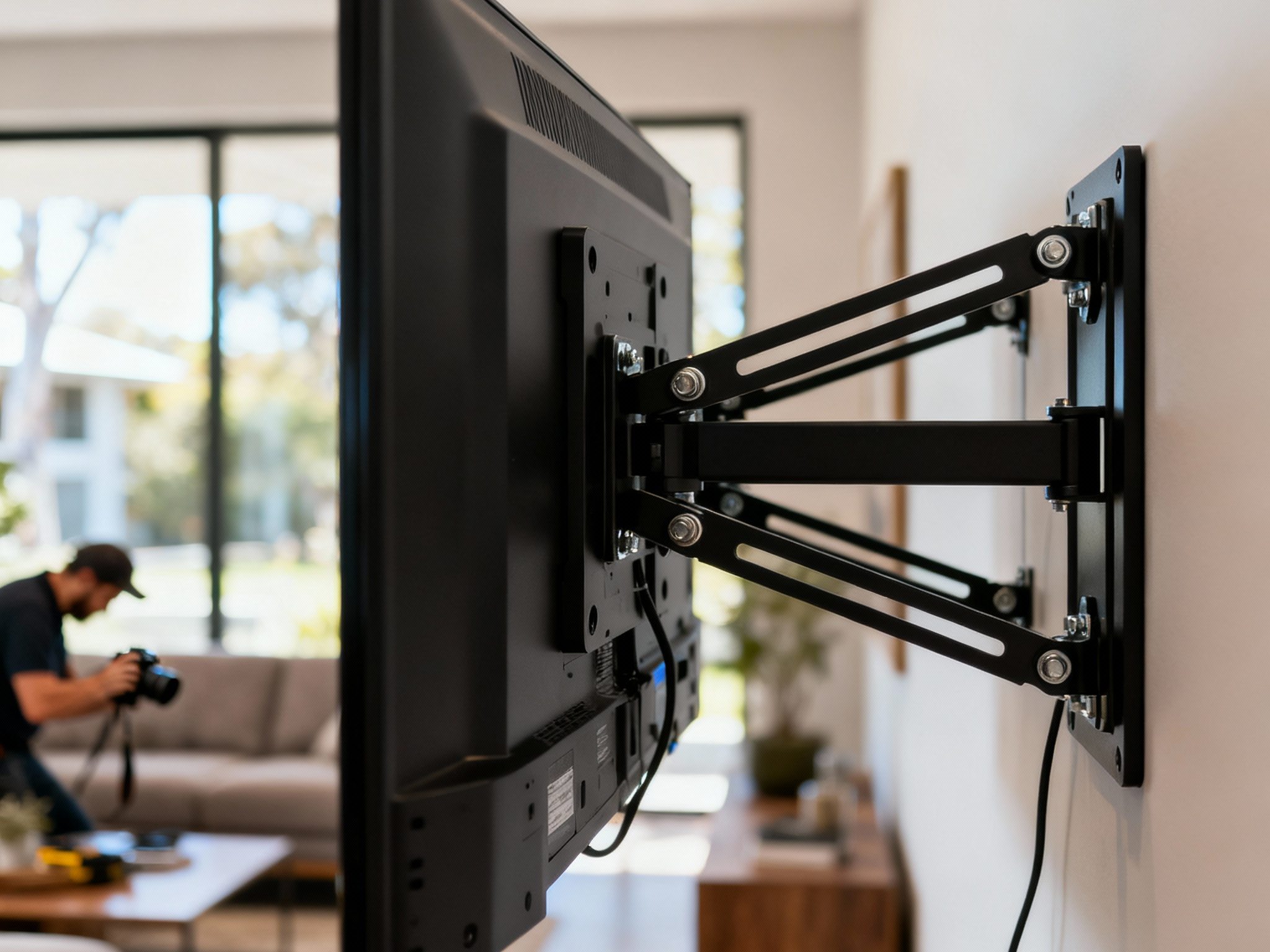
Full-Motion Articulating Mounts (Not Recommended): Extended articulating arms create enormous leverage multiplying effective TV weight several times over. This leverage exceeds safe hollow-wall capacity regardless of anchor quality. Never use articulating mounts with hollow-wall mounting—failure likelihood approaches certainty.
Plasterboard Condition Assessment
Wall condition dramatically affects hollow-wall mounting viability—compromised plasterboard cannot safely support televisions.
Condition factors requiring evaluation:
Moisture Damage: Water exposure softens gypsum dramatically. Moisture-affected plasterboard lacks adequate strength for any TV mounting. Address moisture sources and replace damaged sections before attempting mounting.
Age-Related Deterioration: Older plasterboard may have degraded through decades of humidity exposure, temperature cycling, and building movements. Older installations require careful assessment before hollow-wall mounting.
Previous Damage: Repaired cracks, patched holes, or previous anchor pull-throughs indicate compromised structural integrity. These damaged areas cannot support hollow-wall TV mounting safely.
Paper Facing Condition: Tears, delamination, or deterioration of paper facing compromises plasterboard structural integrity. Damaged facing reduces anchor holding capacity substantially.
Professional assessment identifies wall condition issues preventing safe hollow-wall mounting, recommending necessary repairs or alternative mounting approaches.
When Stud Mounting Remains Essential
Despite hollow-wall anchor capabilities, many situations demand stud mounting for safety.
TVs requiring stud mounting regardless of owner preferences:
- Any television exceeding 25kg weight
- Screen sizes beyond 55 inches
- Any articulating mount installation
- Situations where stud locations allow reasonable positioning
- Compromised plasterboard conditions
- High-traffic areas where accidental impacts likely
- Homes with young children or pets creating additional stress
Alternative position consideration: Before committing to marginal hollow-wall mounting, explore whether slight position adjustments align with available studs. Minor compromises in ideal positioning prove worthwhile achieving substantially superior mounting security.
Professional Assessment Value
Expert evaluation determines whether specific situations safely accommodate hollow-wall mounting or require alternatives.
Professional assessment includes:
- Accurate TV weight verification from manufacturer specifications
- Plasterboard thickness and condition evaluation
- Anchor system selection appropriate for specific conditions
- Installation technique optimization
- Honest evaluation whether hollow-wall mounting provides adequate safety
- Alternative solution recommendations when hollow-wall approach proves inadequate
Professional installers decline hollow-wall installations when weight, wall condition, or mount type exceeds safe parameters—protecting clients from dangerous installations despite customer desires.
Reinforcement Alternatives
When hollow-wall mounting proves inadequate but position changes unacceptable, reinforcement provides solutions.
Backing Board Installation: Installing timber or plywood backing behind plasterboard creates solid mounting surfaces. This approach requires cutting plasterboard, installing backing secured to studs, and closing walls—substantial work justified when specific positioning proves essential.
External Reinforcement Plates: Large mounting plates distributing loads across broader plasterboard areas improve holding capacity modestly. However, these plates prove visible and provide limited improvement over quality anchors alone.
Structural Modifications: Adding studs or blocking between existing framing provides proper mounting support. This substantial renovation proves worthwhile for permanent installations in specific critical locations.
Consumer Tips for Stud-Free Mounting
- Honestly assess TV weight—don’t underestimate to justify marginal installations
- Accept conservative weight limits—manufacturer anchor ratings represent ideals rarely achieved
- Use fixed mounts exclusively—no tilting or articulating options on hollow walls
- Employ multiple quality anchors—never rely on single anchors regardless of ratings
- Consider position compromise—slight adjustments may align with available studs
- Verify plasterboard condition—damaged walls cannot support safe mounting
- Seek professional assessment—expertise prevents dangerous installations
- Prioritize safety over aesthetic preferences—TV replacement costs less than property damage or injury
When asking can you mount tv without studs in wall in Adelaide, hollow-wall mounting proves possible for lighter televisions using quality anchors within strict weight limitations. Golden Antenna provides honest professional assessment determining whether specific situations safely accommodate stud-free mounting or require alternative solutions.
Located in Adelaide S.A. 5000 and reachable at 0403 711 983, we evaluate TV weight, wall condition, and mounting requirements, recommending safe approaches rather than compromising safety for convenience. Our expertise prevents dangerous installations while exploring all viable options including position adjustments, reinforcement, or alternative mounting methods.
Frequently Asked Questions
Q: What’s the maximum TV size for mounting without studs?
A: Safe hollow-wall mounting typically limits to 50-55 inch TVs weighing under 20-25kg total. Larger or heavier TVs require stud mounting regardless of anchor quality for adequate safety margins.
Q: Are expensive anchors worth premium costs for TV mounting?
A: Quality anchors like snaptoggle systems provide superior performance justifying higher costs for hollow-wall TV applications. Cheap anchors fail more readily under sustained loads creating dangerous situations.
Q: Can I use articulating mounts without stud backing?
A: No—articulating arm leverage exceeds safe hollow-wall capacity regardless of anchor quality. Extended arms multiply effective weight several times creating failure certainty without solid backing.
Q: How do I know if my plasterboard can support hollow-wall mounting?
A: Professional assessment evaluates plasterboard thickness, condition, and moisture exposure determining safe mounting viability. Compromised plasterboard cannot support TV mounting regardless of anchor selection.
Q: Will multiple cheap anchors work as well as fewer quality anchors?
A: No—inferior anchors fail unpredictably regardless of quantity. Quality anchors with proven performance provide reliable holding strength while cheap alternatives create false security preceding sudden failures.
Conclusion
Understanding can you mount tv without studs in wall in Adelaide reveals that hollow-wall mounting proves possible for lighter televisions using specialized anchors within strict limitations. Toggle bolts, snaptoggle anchors, and molly bolts provide strongest hollow-wall options when properly installed. Realistic weight limitations cap safe mounting around 20-25kg regardless of optimistic anchor ratings.
Fixed mounts only suit hollow-wall applications—tilting and articulating options exceed safe capacity. Plasterboard condition assessment proves essential identifying moisture damage or deterioration preventing safe mounting. Many situations require stud mounting for adequate safety despite hollow-wall anchor availability.
Professional assessment determines viability preventing dangerous installations while exploring alternatives. Golden Antenna provides expert evaluation and honest guidance throughout Adelaide. Contact us at 0403 711 983 for professional assessment determining safe mounting solutions for your specific situation.
