
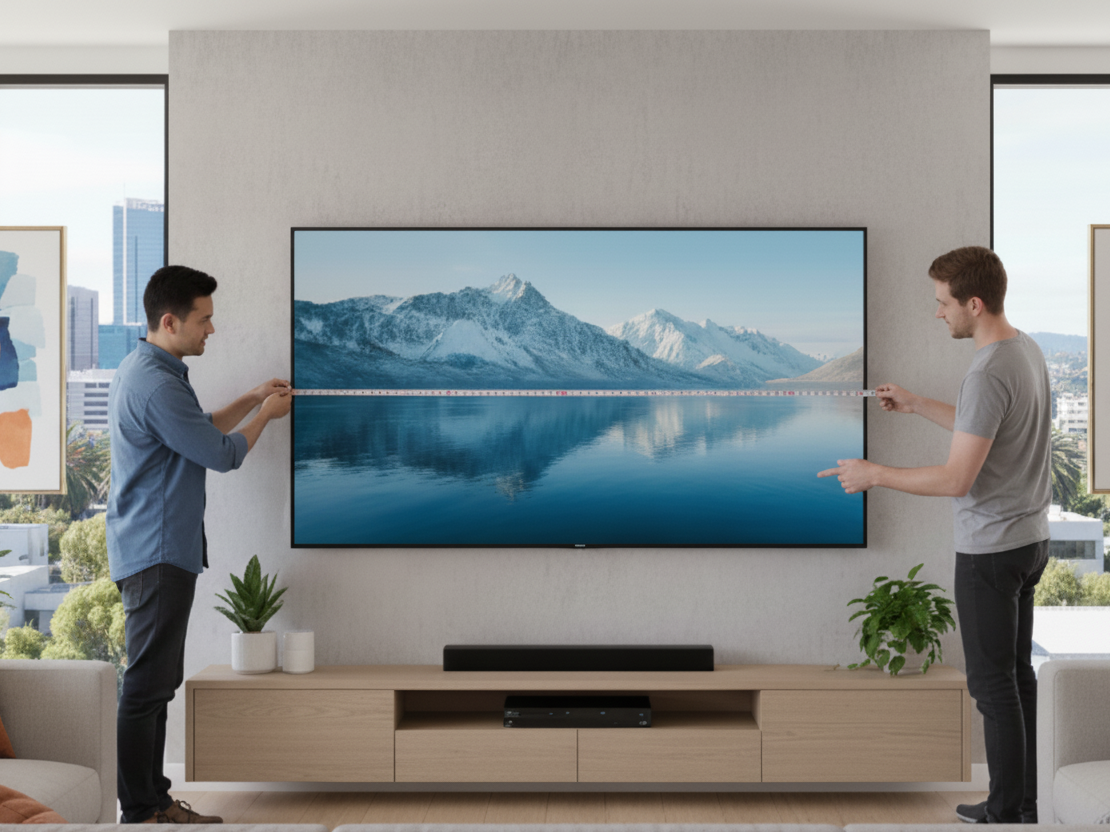
Standing in the electronics store surrounded by massive televisions, you envision that stunning 85-inch display transforming your living room into a home cinema. But before making the purchase, a critical question emerges—can your wall actually support that size television safely?
If you’re asking what size tv can you wall mount in Adelaide, you’re recognizing that bigger isn’t always better when structural limitations, viewing distances, and room proportions enter the equation. Adelaide homes feature diverse construction methods from century-old brick walls to modern plasterboard that each support different maximum TV weights and sizes. Screen size itself matters less than weight, mount type, wall structure, and proper installation technique.
Many homeowners discover too late that their dream television exceeds their wall’s capacity or creates uncomfortable viewing from improper sizing for room dimensions. This guide reveals how to determine appropriate TV sizes for wall mounting, examining weight limitations, viewing distance calculations, wall capacity assessment, and why professional evaluation prevents expensive mistakes.
Key Takeaways
- TV size for wall mounting depends primarily on weight capacity rather than screen dimensions, with wall type determining maximum safe loads.
- Understanding what size tv can you wall mount in Adelaide requires evaluating wall construction, stud availability, viewing distance requirements, and proper weight distribution.
- Modern TVs range from 10kg for small screens to 50kg+ for 85-inch displays, with weight varying significantly even among similar-sized models.
- Common mistakes include selecting TVs based solely on screen size, ignoring weight specifications, underestimating room viewing distances, and attempting oversized installations on inadequate walls.
- Professional assessment evaluates wall capacity, calculates optimal TV sizes for viewing distances, selects appropriate mounting hardware, and executes safe installations matching your specific situation.
Overview
Television sizes have grown dramatically over recent decades as manufacturing costs decreased and consumer preferences shifted toward larger displays. However, wall mounting capabilities haven’t expanded equally—structural limitations remain constant regardless of television technology advancements.
Understanding what size tv can you wall mount in Adelaide involves examining multiple factors beyond simple size ranges. Wall composition determines weight capacity, viewing distances affect optimal screen sizes, room proportions influence aesthetic balance, and mounting hardware capabilities vary significantly. Adelaide’s housing stock spans heritage construction with solid brick walls supporting substantial weight to modern apartments with plasterboard limiting mounting options.
This exploration reveals how to select appropriate TV sizes for wall mounting, examining weight calculations, viewing distance formulas, wall capacity assessment, and why expert consultation prevents mismatched purchases that create installation problems or unsatisfactory viewing experiences.
Understanding TV Weight vs. Screen Size
Screen size alone doesn’t determine mounting feasibility—weight matters most for structural safety. Modern LED and OLED panels weigh significantly less than older plasma or projection technologies. However, substantial variation exists even within current television categories.
Typical weight ranges by screen size:
- 32-43 inches: 5-10kg – Light weight suitable for most wall types including plasterboard with quality anchors
- 50-55 inches: 12-18kg – Medium weight requiring stud mounting or premium plasterboard anchors
- 65-75 inches: 20-35kg – Heavy weight demanding stud mounting in most situations
- 80-85+ inches: 35-55kg – Very heavy requiring multiple stud mounting points with reinforced brackets
Premium brands sometimes weigh more than budget alternatives due to better construction and additional features. Gaming-focused displays with high refresh rates may include heavier internal components. Built-in soundbars add several kilograms beyond base panel weight. Always verify exact weight specifications before purchasing mounting hardware.
When people ask what size tv can you wall mount in Adelaide, the answer starts with identifying wall capacity then matching appropriate TV weights to that capacity. A 75-inch TV weighing 25kg might mount safely while an 85-inch model at 45kg exceeds wall capability despite only 10 inches size difference.
TV Size Guide Adelaide: What Size Can You Wall Mount?
Professional guide to selecting appropriate TV sizes for wall mounting
| TV Size Category | Weight & Specifications | Mounting Requirements |
|---|---|---|
| TV Weight Ranges by Screen Size | ||
| 32-43 inches | 5-10kg – Light weight category | Suitable for most wall types including plasterboard with quality anchors |
| 50-55 inches | 12-18kg – Medium weight category | Requires stud mounting or premium plasterboard anchors |
| 65-75 inches | 20-35kg – Heavy weight category | Demands stud mounting in most situations for safety |
| 80-85+ inches | 35-55kg – Very heavy weight category | Requires multiple stud mounting points with reinforced brackets |
| Weight variations | Premium brands may weigh more due to better construction and features | Always verify exact weight specifications before purchasing hardware |
| Solid Brick Walls | ||
| Maximum capacity | Supports largest televisions including 85+ inch displays | Heritage Adelaide homes with double-brick construction |
| Weight support | 50kg+ safely accommodated with proper masonry anchors | Anchors must penetrate sufficiently deep into solid bricks |
| Installation challenge | Drilling hard brick without damaging decorative surfaces | Professional installation protects heritage features |
| Brick Veneer Walls | ||
| Construction type | Outer brick layer with timber frame and internal plasterboard | Common in Adelaide homes from 1960s onward |
| Mounting requirements | Must penetrate through to timber studs for support | Brick veneer itself provides minimal weight support |
| TV size limitations | Typically supports 65-75 inch televisions safely | Depends on stud spacing and timber frame strength |
| Timber Frame with Plasterboard | ||
| Stud mounting capacity | Safely supports TVs up to 75 inches when mounting to studs | Modern construction with plasterboard over timber studs |
| Plasterboard-only limitations | Maximum 50 inches approximately due to 20-25kg weight restriction | Specialized anchors required but capacity significantly limited |
| Steel Frame Construction | ||
| Frame capacity | Steel studs support weight comparably to timber with proper fasteners | Newer apartments commonly use steel framing with plasterboard |
| TV size support | Up to 75 inches mount safely when anchoring to steel frame members | Must use fasteners specifically designed for metal frames |
| Viewing Distance and Screen Size Optimization | ||
| General formula | Viewing distance should equal 1.5-2.5x screen diagonal | 4K displays allow closer viewing than 1080p without pixelation |
| 43-inch TV | Optimal viewing distance: 1.6-2.7 meters | Suitable for compact rooms and smaller spaces |
| 55-inch TV | Optimal viewing distance: 2.1-3.5 meters | Popular size for medium-sized living rooms |
| 65-inch TV | Optimal viewing distance: 2.4-4.1 meters | Ideal for larger living spaces with adequate seating distance |
| 75-inch TV | Optimal viewing distance: 2.8-4.7 meters | Requires substantial viewing distance for comfortable experience |
| 85-inch TV | Optimal viewing distance: 3.2-5.4 meters | Open-plan living areas often accommodate these distances |
| Adelaide-Specific Considerations | ||
| Heritage regulations | Certain suburbs restrict external antenna installations | Affects signal reception for larger televisions requiring stronger signals |
| Temperature extremes | Thermal expansion affects large TV mounting over time | Quality brackets accommodate seasonal expansion without loosening |
| Irregular stud spacing | Older homes with non-standard stud locations | Finding mounting positions for largest TVs becomes challenging |
| Common TV Sizing Mistakes | ||
| Buying largest affordable TV | Without assessing wall capacity leads to installation problems | Professional assessment before purchasing prevents disappointments |
| Ignoring viewing distance | Results in oversized TVs for compact rooms or undersized displays for large spaces | Creates uncomfortable viewing regardless of successful mounting |
| Underestimating complexity | TVs exceeding 65 inches demand two-person handling minimum | Professional installation eliminates injury risks and mounting failures |
| Inadequate safety margins | Selecting mounts at maximum capacity without buffer | Temperature, vibration, and time stress mounting systems over years |
| Professional Assessment Benefits | ||
| Comprehensive evaluation | Wall capacity, viewing distance, room proportions assessed simultaneously | Balanced recommendations rather than single-criteria focus |
| Detection equipment | Identifies stud locations and assesses wall condition accurately | Calculates load capacities preventing unsafe installations |
| Installation expertise | Precision in leveling, anchoring, and load distribution | Scales appropriately with TV size and weight requirements |
| Pre-purchase consultation | Prevents purchasing televisions that won’t mount safely | Avoids expensive wall reinforcement or installation impossibility |
Wall Type Capacity and Size Limitations
Adelaide’s diverse construction creates varied wall mounting capabilities. Each wall type supports different maximum loads affecting which TV sizes mount safely.
Solid Brick Walls
Heritage Adelaide homes feature double-brick construction supporting substantial weight. These walls safely accommodate the largest televisions when proper masonry anchors penetrate sufficiently into bricks. Even 85-inch displays weighing 50kg+ mount securely with appropriate hardware and professional installation. The challenge involves drilling hard brick without damaging decorative surfaces or heritage features.
Brick Veneer Walls
Common in Adelaide homes from 1960s onward, brick veneer combines outer brick layer with timber frame and internal plasterboard. Mounting must penetrate through to timber studs—the brick veneer itself provides minimal support. TV size limitations depend on stud spacing and timber frame strength, typically supporting 65-75 inch televisions safely when mounting to multiple studs.
Timber Frame with Plasterboard
Modern construction uses plasterboard over timber or steel studs. Mounting directly to studs safely supports large televisions up to 75 inches. Plasterboard-only mounting using specialized anchors limits TV sizes to approximately 50 inches maximum due to weight restrictions around 20-25kg.
Steel Frame Construction
Newer apartments use steel framing with plasterboard sheets. Steel studs support weight comparably to timber when proper fasteners designed for metal frames are used. TV sizes up to 75 inches mount safely when anchoring to steel frame members rather than plasterboard alone.
Our mission at Golden Antenna is to support our clients in enhancing their homes and lives through reliable and expert antenna installation. We guide clients to achieve seamless connectivity and a stress-free viewing experience, aligning every installation with their needs and lifestyle. The excitement of getting exactly what you want combines with the personable feeling of being understood, creating a safe, judgment-free zone where your entertainment needs receive proper attention.
Viewing Distance and Screen Size Optimization
Wall capacity might support enormous televisions, but viewing comfort requires appropriate screen sizes for viewing distances. Sitting too close to oversized screens causes eye strain and uncomfortable head movement tracking action. Mounting too-small TVs for viewing distances reduces immersion and detail visibility.
Optimal viewing distance calculations:
The general formula suggests viewing distance should equal 1.5-2.5 times the screen diagonal measurement. However, resolution affects this calculation—4K displays allow closer viewing than 1080p screens without visible pixelation.
- 43-inch TV: Optimal viewing distance 1.6-2.7 meters
- 55-inch TV: Optimal viewing distance 2.1-3.5 meters
- 65-inch TV: Optimal viewing distance 2.4-4.1 meters
- 75-inch TV: Optimal viewing distance 2.8-4.7 meters
- 85-inch TV: Optimal viewing distance 3.2-5.4 meters
Adelaide’s open-plan living areas often exceed these distances, accommodating larger screens comfortably. Compact apartments may struggle fitting optimal viewing distances for 75+ inch displays. Professional consultation measures your space accurately, recommending screen sizes balancing wall capacity with viewing comfort.
Room Proportion and Aesthetic Balance
Beyond technical limitations, screen size should complement room proportions. Enormous televisions dominating small rooms create overwhelming visual impact that detracts from balanced interior design. Conversely, modest screens in large spaces appear insignificant and underutilize available viewing potential.
Professional installers consider ceiling height, wall width, furniture scale, and overall room aesthetics when recommending TV sizes. They assess whether proposed sizes maintain visual harmony with surrounding elements. This holistic approach prevents technically successful installations that somehow feel “wrong” aesthetically.
Consumer Tips for TV Size Selection
Before purchasing TVs:
- Measure your viewing distance from seating to proposed TV location using tape measure for accuracy
- Calculate optimal screen size range using viewing distance formulas accounting for 4K resolution
- Verify your wall type and assess whether stud mounting will be available at desired location
- Check TV weight specifications for models you’re considering—compare options within target size range
- Consider room aesthetics and whether proposed sizes complement rather than overwhelm spaces
During TV selection:
- Prioritize weight over screen size when wall capacity limits installation options
- Compare weights between brands and models—lighter options expand mounting possibilities
- Factor in mount type weight—articulating mounts add several kilograms to total wall load
- Read professional reviews noting build quality affecting long-term mounting reliability
- Verify VESA mounting patterns ensuring compatibility with available mounting brackets
Installation planning:
- Schedule professional assessment before purchasing extremely large televisions to confirm feasibility
- Discuss viewing angles and potential glare from windows affecting large screen visibility
- Consider future-proofing by selecting mounts supporting slightly larger sizes for eventual upgrades
- Plan cable management for larger TVs requiring more complex connectivity arrangements
Adelaide-Specific Size Considerations
Heritage regulations in certain Adelaide suburbs restrict external antenna installations affecting signal reception for larger televisions. Professional installers navigate these requirements, positioning antennas optimally within regulatory constraints. Larger screens demand stronger signals for quality picture rendering—considerations affecting TV size viability in restricted areas.
Adelaide’s temperature extremes create thermal expansion affecting large TV mounting over time. Quality brackets accommodate seasonal expansion and contraction without loosening. Cheap hardware develops rattles or gradually loosens as large, heavy TVs stress inadequate mounting systems through repeated thermal cycling.
Established Adelaide suburbs feature older homes with irregular stud spacing. Finding mounting positions for largest TVs becomes challenging when stud locations don’t align with optimal viewing positions. Professional installers develop creative solutions maximizing stud anchoring while achieving desired positioning.
Professional Assessment Benefits
Expert evaluation determines realistic TV size limits for your specific walls. Professionals use detection equipment identifying stud locations, assessing wall condition, and calculating load capacities accurately. This assessment prevents purchasing televisions that won’t mount safely or require expensive wall reinforcement.
Professional consultation considers all factors simultaneously—wall capacity, viewing distance, room proportions, budget constraints, and personal preferences. This comprehensive approach delivers balanced recommendations rather than focusing on single criteria. The result matches TV sizes to situations holistically for optimal outcomes.
Installation expertise becomes increasingly important with larger, heavier televisions. A 32-inch TV installation forgives minor technique imperfections that create dangerous situations with 75-inch displays. Professional precision in leveling, anchoring, and load distribution scales appropriately with TV size and weight.
Common TV Sizing Mistakes
Buying the largest TV affordable without assessing wall capacity leads to installation problems when walls can’t support heavy displays. The excitement of enormous screens fades quickly when mounting proves impossible or unsafe. Professional assessment before purchasing prevents these disappointments.
Ignoring viewing distance calculations results in oversized TVs for compact rooms or undersized displays for large spaces. The mismatch creates uncomfortable viewing regardless of successful mounting. Proper sizing calculations before purchasing delivers comfortable long-term viewing.
Underestimating installation complexity for large TVs causes DIY attempts to struggle with heavy, awkward displays. TVs exceeding 65 inches demand two-person handling minimum. Mounting precision becomes critical as weight increases. Professional installation eliminates injury risks and mounting failures from improper technique.
Selecting mounts based on maximum capacity ratings without safety margins creates borderline situations where mounts barely support TV weight. Temperature variations, vibration, and time all stress mounting systems. Adequate safety margins prevent failures from accumulated stress over years.
Determining what size tv can you wall mount in Adelaide depends on wall type, TV weight, viewing distances, and proper installation execution. Golden Antenna provides expert assessment evaluating your specific walls, measuring viewing spaces, and recommending appropriate TV sizes. Located in Adelaide S.A. 5000 and reachable at 0403 711 983, we deliver comprehensive consultation before you purchase televisions, preventing expensive mistakes.
Our installation services handle TVs from compact 32-inch displays to massive 85+ inch screens, selecting appropriate mounting hardware and executing professional techniques ensuring safe, lasting installations optimized for your viewing comfort and room aesthetics.
Golden Antenna provides expert consultation and installation services throughout Adelaide. Contact us at 0403 711 983 for professional assessment determining appropriate TV sizes for your walls before you purchase, preventing expensive mistakes while optimizing your viewing experience.
Frequently Asked Questions
Q: What’s the largest TV I can mount on plasterboard walls?
A: Plasterboard-only mounting limits TVs to approximately 50-55 inches maximum due to weight restrictions around 20-25kg. Mounting to timber studs behind plasterboard safely supports 75+ inch displays.
Q: Do heavier mounts reduce TV size I can install?
A: Mount weight adds to total wall load—articulating mounts weighing 5-8kg reduce available capacity for TV weight by that amount. Fixed mounts weigh less, maximizing TV size potential for given wall capacity.
Q: Can I mount 85-inch TVs in Adelaide homes?
A: Solid brick walls and stud-mounted installations safely support 85-inch TVs. Plasterboard-only mounting cannot safely accommodate 85-inch displays regardless of anchor quality.
Q: How do I know my wall can support my TV size?
A: Professional assessment identifies wall type, locates studs, evaluates condition, and calculates maximum safe load. This evaluation determines appropriate TV sizes before purchasing displays.
Q: Does TV thickness affect what size I can mount?
A: Thickness alone doesn’t matter—weight determines mounting feasibility. Modern thin TVs often weigh less than thicker older models, actually expanding mounting options despite larger screen sizes.
Conclusion
Understanding what size tv can you wall mount in Adelaide reveals that weight capacity, viewing distance, wall type, and proper installation determine appropriate screen sizes rather than arbitrary limits.
Adelaide’s diverse construction creates varied wall capabilities from heritage brick supporting massive displays to modern plasterboard requiring careful weight management. Common mistakes including ignoring weight specifications, miscalculating viewing distances, and underestimating installation complexity compromise results. Professional assessment evaluates wall capacity, measures viewing spaces, recommends optimal TV sizes, and executes proper installation techniques.
