
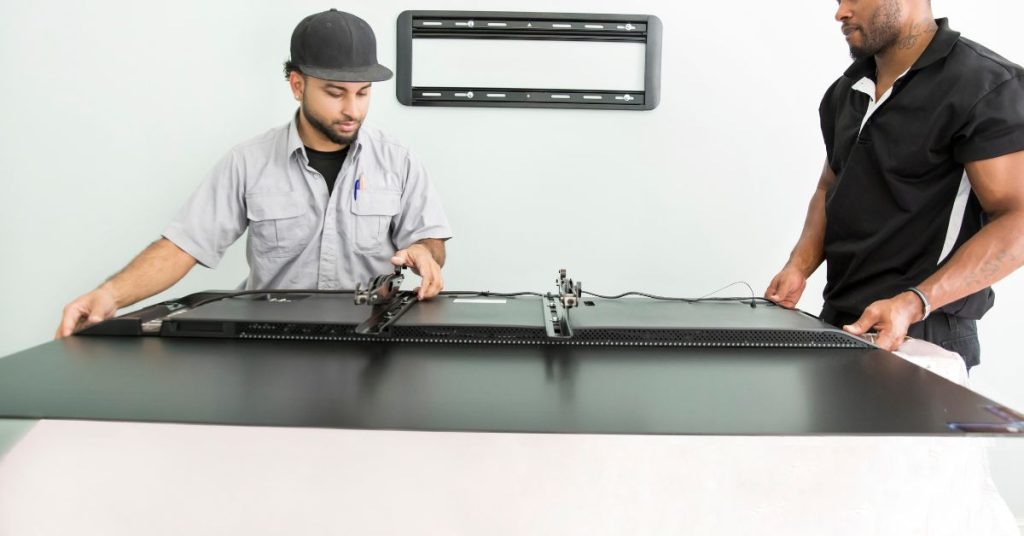
Your perfect wall location for a television has one critical problem—no studs behind it. The studs that frame your walls sit exactly where you don’t need them, leaving only hollow drywall where your TV would look ideal. Panic sets in as you realize mounting typically requires anchoring into timber framing.
But here’s the truth: mounting televisions on stud-free drywall is possible using specialized hardware, provided you understand weight limitations and proper installation techniques. If you’re asking how to mount a tv to the wall without studs, you’re facing a common challenge in Adelaide homes where room layouts don’t align conveniently with structural framing.
Modern drywall anchors can support moderate-weight televisions when installed correctly, but this doesn’t mean grabbing the first kit from a hardware store will deliver safe, lasting results. This guide reveals professional approaches to drywall mounting, specialized anchors that work, weight capacity realities, and why improper installation creates dangerous situations that professional expertise prevents from the beginning.
Key Takeaways
- Mounting TVs on drywall without studs requires specialized anchors rated for specific weight capacities that differ dramatically from basic fasteners.
- Understanding how to mount a tv to the wall without studs involves learning about toggle bolts, molly bolts, and expanding anchors designed for hollow-wall installation.
- Weight limitations with drywall-only mounting restrict TV sizes significantly compared to stud-mounted installations that support heavier displays.
- Common mistakes include overestimating anchor capacity, using incorrect anchor types, failing to space anchors properly, and ignoring weight limits leading to wall failures.
- Professional assessment determines whether drywall mounting suits your TV weight, selects appropriate anchors, and installs them correctly ensuring lasting safety and reliability.
Overview
Mounting televisions without accessible studs presents legitimate challenges requiring specialized knowledge. Drywall alone cannot support heavy objects—anchors distributed across wall surface area compensate for lacking structural framing.
Modern anchor technology enables drywall mounting within specific weight limitations, but confusion surrounds which anchors work best for television applications. Adelaide’s housing construction often creates situations where ideal TV locations lack convenient stud placement. Understanding how to mount a tv to the wall without studs requires examining anchor types, their load ratings, proper installation procedures, and realistic weight capacities.
Attempting improper installations risks catastrophic failures where TVs crash to floors, damaging equipment and potentially injuring occupants. This exploration examines drywall mounting options, their limitations, installation requirements, and why professional guidance prevents dangerous mistakes that DIY attempts frequently create.
Understanding Drywall Anchor Types
Toggle bolts represent the strongest drywall anchors, spreading load across large wall surface areas. These anchors feature spring-loaded wings that flip open behind drywall, creating enormous holding pressure.
Toggle bolts rated for 20-30kg work effectively for smaller televisions when properly installed. However, they require drilling larger holes and precise installation techniques that inexperience often botches. Removing toggle bolts damages drywall, making repositioning difficult.
Molly bolts combine expansion and mechanical locking, providing excellent holding strength for medium-weight applications. As bolts tighten, internal expansion forces increase holding pressure against drywall. Molly bolts rated 15-25kg suit smaller TV mounting in locations where permanent installation seems acceptable.
These anchors require appropriate drilling, and bolts must be tightened to manufacturer specifications—undertightening reduces holding strength while overtightening crushes drywall.
Expanding anchors work through plastic or metal sleeves that widen as bolts tighten. These anchors provide moderate holding strength when properly installed. Cheap expansion anchors crush easily under sustained loads, failing suddenly. Quality expanding anchors maintain performance longer but still have weight limitations that heavier televisions exceed.
Self-drilling anchors eliminate drilling requirements, creating their own holes as they screw into drywall. These anchors work for lightweight items but lack capacity for television mounting. Marketing claims suggest they work for “any wall,” but reality limits their television application significantly. Professional installers rarely recommend self-drilling anchors for TV mounting due to inadequate holding strength.
No Studs? How to Mount a TV on Drywall Securely
Professional guide to safe drywall TV mounting without studs
| Anchor Type | Characteristics | Best For |
|---|---|---|
| Drywall Anchor Types and Specifications | ||
| Toggle bolts | Spring-loaded wings flip open behind drywall, rated 20-30kg | Strongest drywall anchor option for smaller TVs |
| Toggle bolt installation | Requires larger holes and precise installation technique | Professional installation recommended for best results |
| Toggle bolt limitations | Difficult to remove without drywall damage, limits repositioning | Best for permanent installations with no relocation plans |
| Molly Bolts | ||
| Mechanism | Internal expansion forces increase holding pressure as bolts tighten | Excellent for medium-weight applications and moderate TVs |
| Weight capacity | Rated 15-25kg, suitable for smaller TV mounting | Permanent installation locations where TVs won’t be moved |
| Installation precision | Must tighten to manufacturer specifications for optimal performance | Undertightening reduces strength; overtightening crushes drywall |
| Expanding Anchors | ||
| Design | Plastic or metal sleeves widen as bolts tighten | Moderate holding strength for lighter TV applications |
| Quality differences | Cheap anchors crush easily; quality anchors maintain performance | Heavier televisions exceed expanding anchor capacity |
| Durability | Quality expanding anchors perform longer than budget alternatives | Still subject to weight limitations compared to toggle or molly bolts |
| Self-Drilling Anchors | ||
| Installation ease | Create their own holes as they screw into drywall | Quick installation for lightweight items only |
| Weight capacity | Insufficient holding strength for television mounting applications | Marketing claims exceed real-world television support capability |
| Professional recommendation | Rarely recommended by installers due to inadequate capacity | Not suitable for TV mounting despite manufacturer claims |
| Weight Capacity Realities and Limitations | ||
| 55-inch TV example | ~20kg weight approaches maximum safe drywall capacity | Heavier TVs create unacceptable failure risks |
| Theoretical vs real-world performance | Anchor ratings represent optimal conditions; installation errors reduce capacity | Improper spacing, angles, and alignment reduce effective holding strength |
| Articulating mount considerations | Extended arms multiply leverage stress beyond rated capacity | Perpendicular pulls dramatically increase anchor stress requirements |
| Older Adelaide homes | Compromised drywall from moisture, settling, or previous damage | Professional assessment identifies weak walls requiring alternatives |
| Common Drywall Mounting Mistakes | ||
| Single large anchor use | Concentrates stress in limited areas instead of distributing loads | Multiple smaller anchors spaced properly spread stress effectively |
| Weight limit ignorance | TVs hold initially then gradually loosen as tiny wall failures accumulate | Sudden failures after weeks or months create dangerous situations |
| Improper installation angles | Shallow angles prevent sufficient expansion forces and holding strength | Must install level and perpendicular to wall surfaces for effectiveness |
| Uneven bolt tightening | Creates uneven holding pressure and compromised load distribution | Professional installation ensures uniform pressure across all anchors |
| Dynamic load disregard | Adjustments, vibration, and temperature movement stress anchors continuously | Professional spacing and selection account for ongoing movement stresses |
| Alternative Solutions | ||
| Finding nearby studs | Wall-scanning equipment locates framing in seemingly impossible locations | Minor TV repositioning enables standard mounting with superior security |
| Temporary mounting solutions | Free-standing stands or furniture-mounted displays avoid wall modification | Ideal for rentals or frequently rearranged spaces |
| Structural reinforcement | Install backing behind drywall creating solid mounting surfaces | Enables full-weight mounting when studs don’t align with preferences |
| Professional assessment | Experts evaluate TV weight, wall condition, and safety requirements | Comprehensive approach prevents DIY mistakes and identifies best solutions |
| Professional Installation Advantages | ||
| Expert evaluation | Accurate weight measurement and wall condition assessment | Safety margins calculated with appropriate load factors |
| Hardware inventory | Extensive selection allowing specific anchor matching to requirements | DIY approaches limited to hardware store stock |
| Installation quality | Level, perpendicular, properly spaced anchors maximize holding strength | Professional attention to detail prevents DIY mistakes |
| Warranty and insurance | Guarantees cover future issues; liability insurance protects property | DIY attempts often aren’t covered by homeowner policies |
Weight Capacity Realities and Limitations
Drywall anchor load ratings represent theoretical maximums under optimal conditions. Real-world performance often falls short when installation technique proves imperfect. Spacing anchors too close creates stress concentration in limited drywall areas.
Anchors installed at angles reduce effective holding strength. Wall irregularities, poor drywall quality, or hidden damage compromise anchor performance.
A 55-inch television weighing 20kg mounted on drywall anchors approaches maximum safe capacity. Any heavier TV risks failure, especially when using lower-rated anchors. Adding articulating mounts that extend from walls multiplies leverage stress.
Anchor capacity requirements increase dramatically when mounting arms pull perpendicular to wall surfaces. This reality means many televisions considered “medium-weight” exceed safe drywall mounting capacity.
Adelaide’s older homes sometimes feature compromised drywall from moisture exposure, settling, or previous damage. These walls provide even less holding capacity than new construction. Professional assessment identifies wall condition before recommending drywall mounting solutions. Weak walls require alternative approaches like temporary mounting or structural reinforcement.
Professional Assessment and Alternative Solutions
Professional installers evaluate whether drywall mounting safely suits your situation. They measure TV weight accurately, assess wall condition, calculate required anchor capacity with safety margins, and select appropriate anchors. This comprehensive approach prevents mistakes that DIY attempts frequently make. Their expertise recognizes when drywall mounting presents unacceptable risks, recommending alternatives instead.
Finding nearby studs often provides superior solutions. Wall-scanning equipment locates framing even when stud locations seem impossible. Repositioning TVs slightly to align with available studs enables standard mounting supporting heavier televisions with greater security. This approach requires compromise regarding ideal positioning but delivers significantly better safety outcomes.
Temporary mounting solutions work for situations where permanent installation isn’t essential. Free-standing TV stands or furniture-mounted displays eliminate wall modification requirements. These approaches suit rental properties, frequently rearranged spaces, or situations where wall condition concerns justify avoiding permanent anchoring.
Structural reinforcement involves installing backing behind drywall, creating solid mounting surfaces for standard brackets. This approach requires cutting drywall, installing timber framing, and closing walls—substantial work justifying professional assistance. However, it enables full-weight television mounting on drywall walls when stud locations don’t align with viewing preferences.
Our mission at Golden Antenna is to support our clients in enhancing their homes and lives through reliable and expert antenna installation. We guide clients to achieve seamless connectivity and a stress-free viewing experience, aligning every installation with their needs and lifestyle. The excitement of getting exactly what you want combines with the personable feeling of being understood, creating a safe, judgment-free zone where your entertainment needs receive proper attention.
Common Drywall Mounting Mistakes
Using single large anchors instead of multiple smaller ones concentrates stress in limited areas. Distributed anchor systems spread loads across broader wall surfaces, reducing local stress concentrations. Professional installations use multiple anchors spaced according to weight distribution calculations—not random spacing or single anchors.
Ignoring weight limits transforms drywall anchors into failure waiting to happen. Many homeowners underestimate TV weight or overestimate anchor capacity. This combination creates situations where TVs hold securely initially then gradually loosen as tiny wall failures accumulate. After weeks or months, anchors suddenly release, dropping televisions unexpectedly.
Improper anchor installation reduces holding strength significantly. Anchors installed at shallow angles don’t create sufficient expansion forces. Bolts tightened unevenly develop uneven holding pressure. Anchors installed into damaged drywall compromise holding capability dramatically. These installation errors occur frequently during DIY attempts where inexperience causes mistakes.
Failing to account for dynamic loads creates problems from movement. Adjusting articulating mounts creates forces stressing anchors. Vibration from nearby traffic or activity loosens connections gradually. Temperature-induced building movement strains anchors continuously. Professional installations account for these dynamic factors, selecting anchors and spacing that withstand ongoing stress.
Why Professional Installation Prevents Disasters
Expert assessment determines whether your specific TV can safely mount on your specific wall. Professionals measure weight accurately, evaluate wall condition using multiple detection methods, calculate required anchor capacity with appropriate safety margins, and select hardware matching calculations exactly. This methodical approach prevents the guesswork that DIY attempts rely upon.
Professional installers carry extensive anchor inventories, selecting specific products matched to your situation’s precise requirements. They understand manufacturer specifications, installation procedures, and real-world performance data that inform superior decisions. Their experience recognizing wall problems—moisture damage, settling damage, previous installation failures—identifies risks that casual observation misses.
Quality workmanship during installation makes enormous differences. Level, perpendicular anchor installation maximizes holding strength. Proper spacing distributes loads effectively across wall surfaces. Secure fastening prevents future loosening from vibration or movement. These execution details separate professional results from amateur attempts where mistakes accumulate throughout installations.
Warranty protection and insurance coverage distinguish professional work from DIY attempts. Professional installations include guarantees addressing any future issues. Liability insurance covers damage from installation failures. These protections provide peace of mind that DIY approaches cannot offer—especially when heavy televisions are at stake.
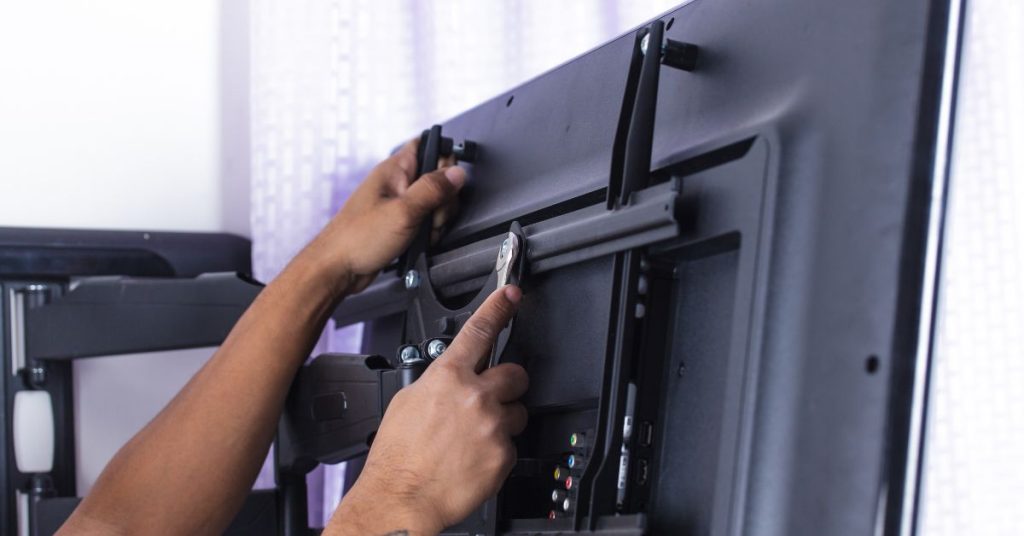
Understanding how to mount a tv to the wall without studs requires professional expertise assessing your specific TV, wall condition, and safety requirements.
Golden Antenna brings specialized knowledge of drywall mounting techniques, anchor selection, and Adelaide building conditions. Located in Adelaide S.A. 5000 and reachable at 0403 711 983, we provide expert assessment determining safe mounting solutions for your situation.
Our comprehensive approach evaluates whether drywall mounting safely suits your needs or recommends alternative solutions. We source quality hardware, perform professional installation with proper spacing and alignment, and guarantee results protecting your television investment while ensuring lasting reliability.
Frequently Asked Questions
Q: Can drywall anchors really support heavy televisions?
A: Quality drywall anchors support moderate-weight TVs within specified load limits, but heavier televisions exceed safe drywall capacity. Professional assessment determines whether your TV weight suits drywall mounting safely.
Q: How many anchors do I need for TV mounting?
A: Anchor quantity depends on TV weight and anchor ratings—typically 2-4 anchors distributed across mounting brackets. Professional installers calculate exact requirements for your specific situation.
Q: What happens if anchors fail?
A: Failed anchors drop televisions suddenly, causing equipment damage and potential injury. This risk justifies professional installation ensuring anchors won’t fail through proper selection, spacing, and installation.
Q: Can I use drywall anchors for articulating mounts?
A: Articulating mounts create excessive leverage stress that exceeds drywall anchor capacity. Fixed mounts only work safely on drywall; articulating mounts require stud mounting or structural reinforcement.
Q: Are there better alternatives to drywall mounting?
A: Finding nearby studs, using free-standing displays, or adding structural reinforcement provide alternatives to drywall-only mounting. Professional assessment identifies the best solution for your specific situation.
Conclusion
Learning how to mount a tv to the wall without studs reveals that drywall mounting requires specialized anchors, realistic weight limitations, and proper installation technique to succeed safely. Common mistakes including inadequate anchor capacity, improper spacing, poor installation alignment, and ignoring weight limits create dangerous failures where televisions crash to floors.
Adelaide’s diverse housing stock presents varied wall conditions affecting drywall mounting viability. Rather than risking catastrophic failures with DIY attempts and guesswork, professional assessment determines safe mounting solutions for your specific television and wall.
Golden Antenna provides expert evaluation identifying whether drywall mounting suits your needs or recommending superior alternatives. Contact us at 0403 711 983 for professional assessment and installation ensuring your television mounts securely without stud support.
